All species › Bustards › Bustards and korhaans
Bustards and korhaans | Otididae
Trappen | Avutardas y sisones
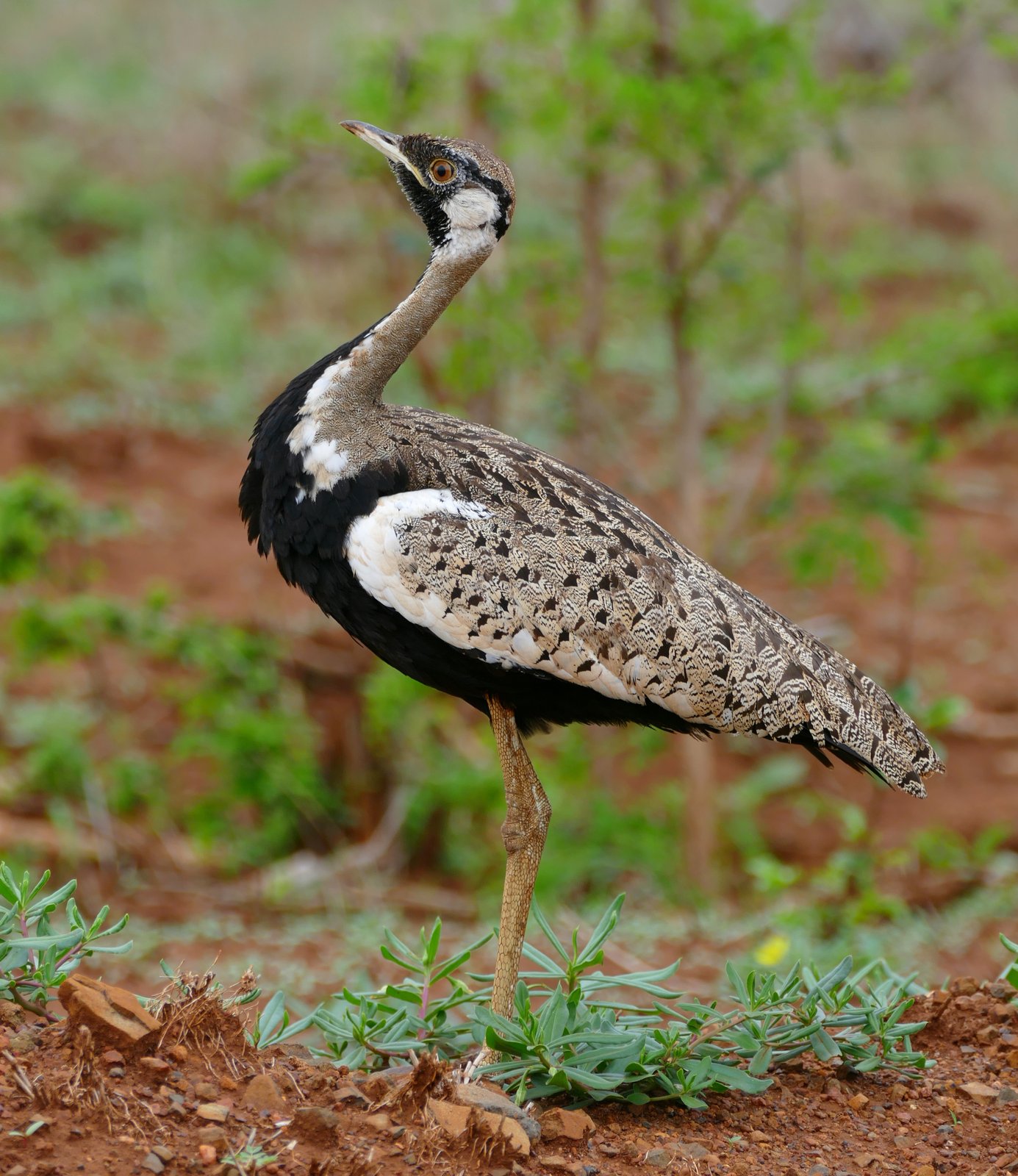
In this region the family runs from the heaviest bird still able to fly to korhaans no bigger than a gamebird, and the displays are as varied. The largest species raises neck, throat and undertail feathers into a white ball, droops the wings and delivers a deep, far-carrying boom; the crested korhaan climbs steeply above the shrub layer and then drops like a stone with the wings pulled in, checking just above the ground; the black korhaans call loudly and raspingly from a tussock or in a flapping flight in which the white primaries flash; and the species of the dry western plains call in duet, the pair alternating their notes so tightly that it sounds like one bird. The nest is no more than a bare patch of ground with one to three spotted, olive to brown eggs; the female incubates alone and leads the chicks, which walk from the start but are still fed by her for weeks. The species of semi-desert and arid plains follow the rainfall and move hundreds of kilometres in doing so, often at night and then known by the call; those of moist grassland and open savanna stay in the same area all year.
Native species 11 species
Species that occur here by nature: breeding birds, winter visitors and passage migrants. They are arranged by genus, in the sequence of the list.
Ardeotis 1 species

Neotis 2 species

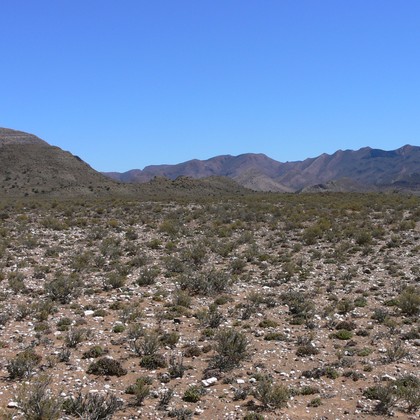

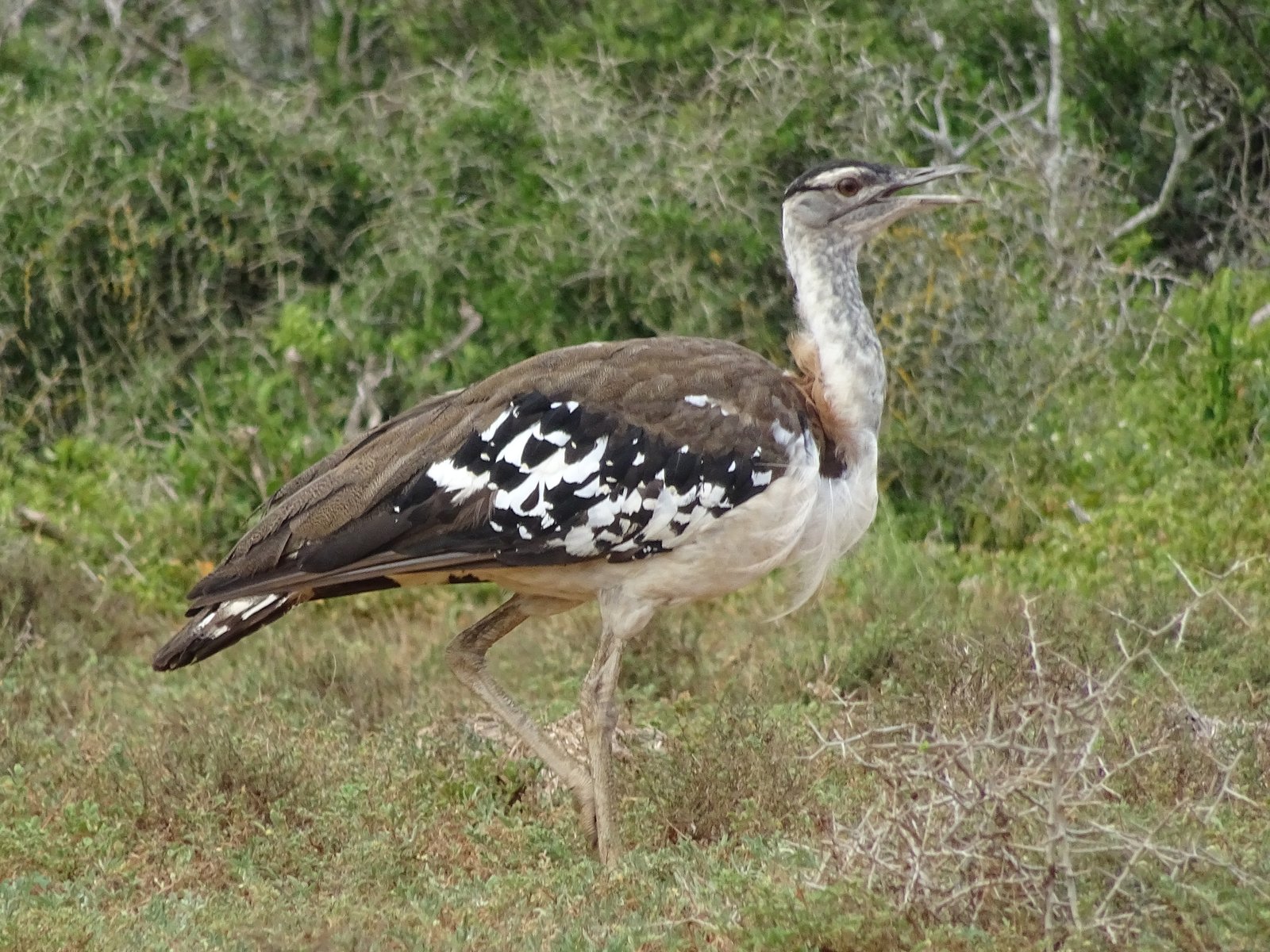


Heterotetrax 2 species

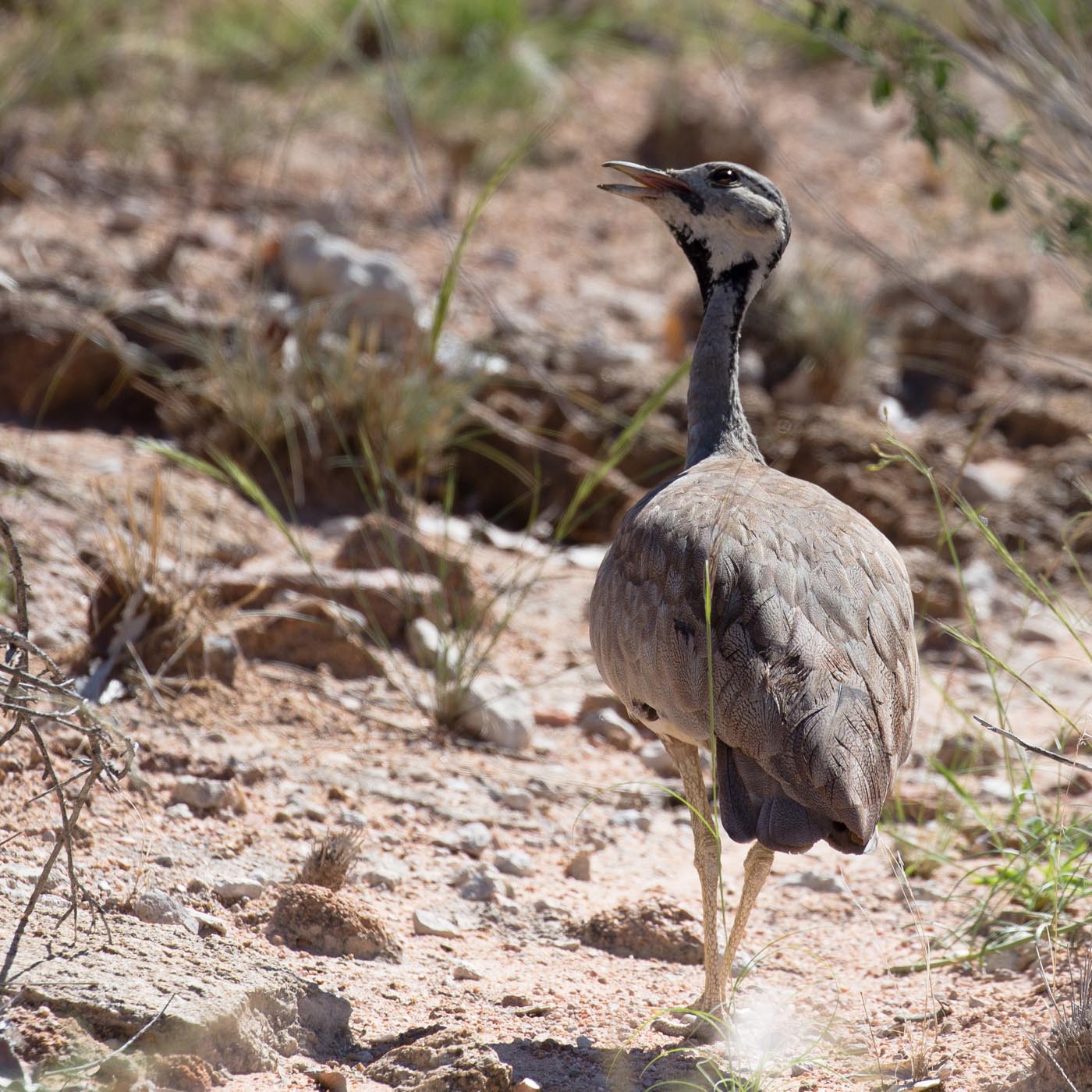
Eupodotis 2 species
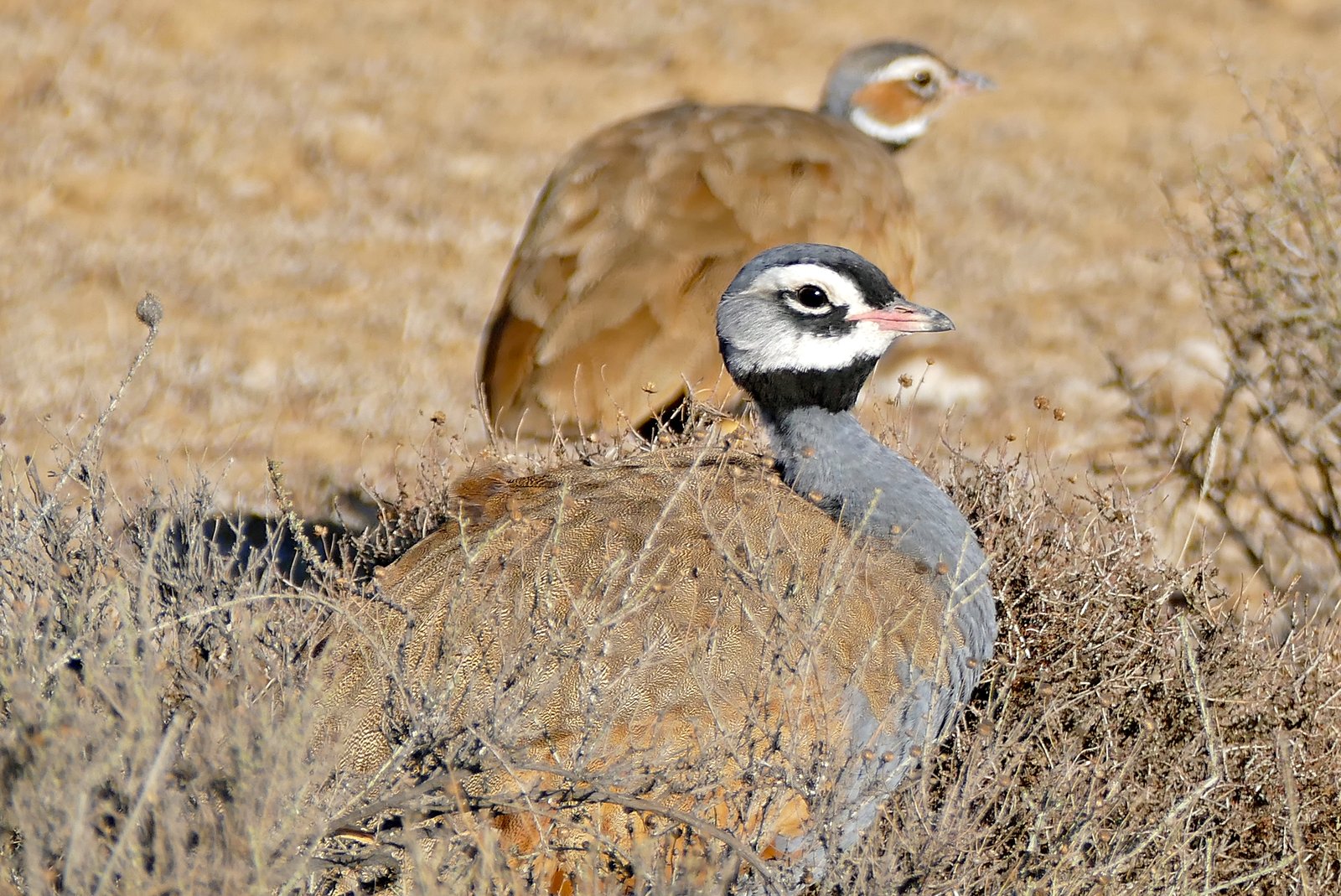
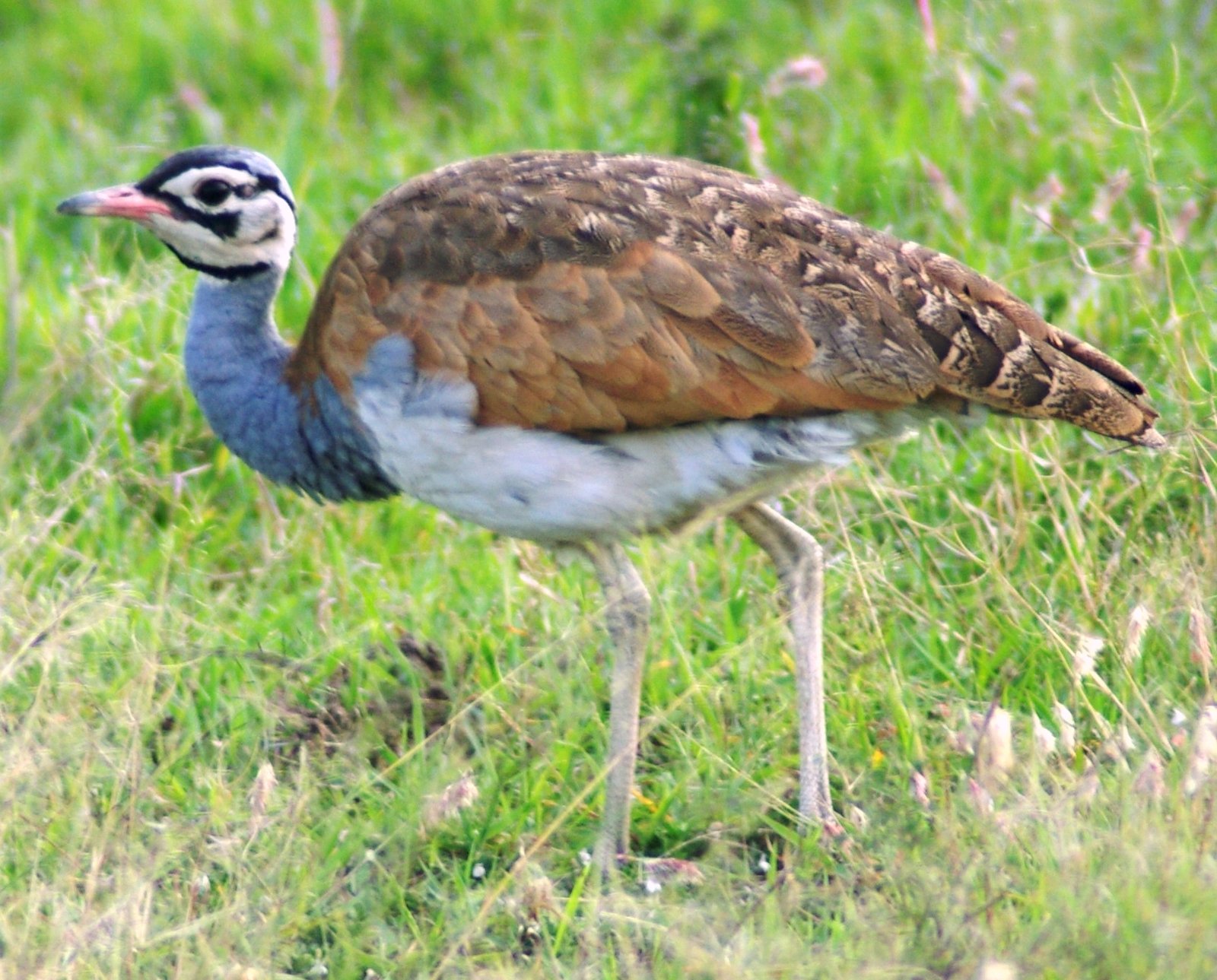
Lophotis 1 species
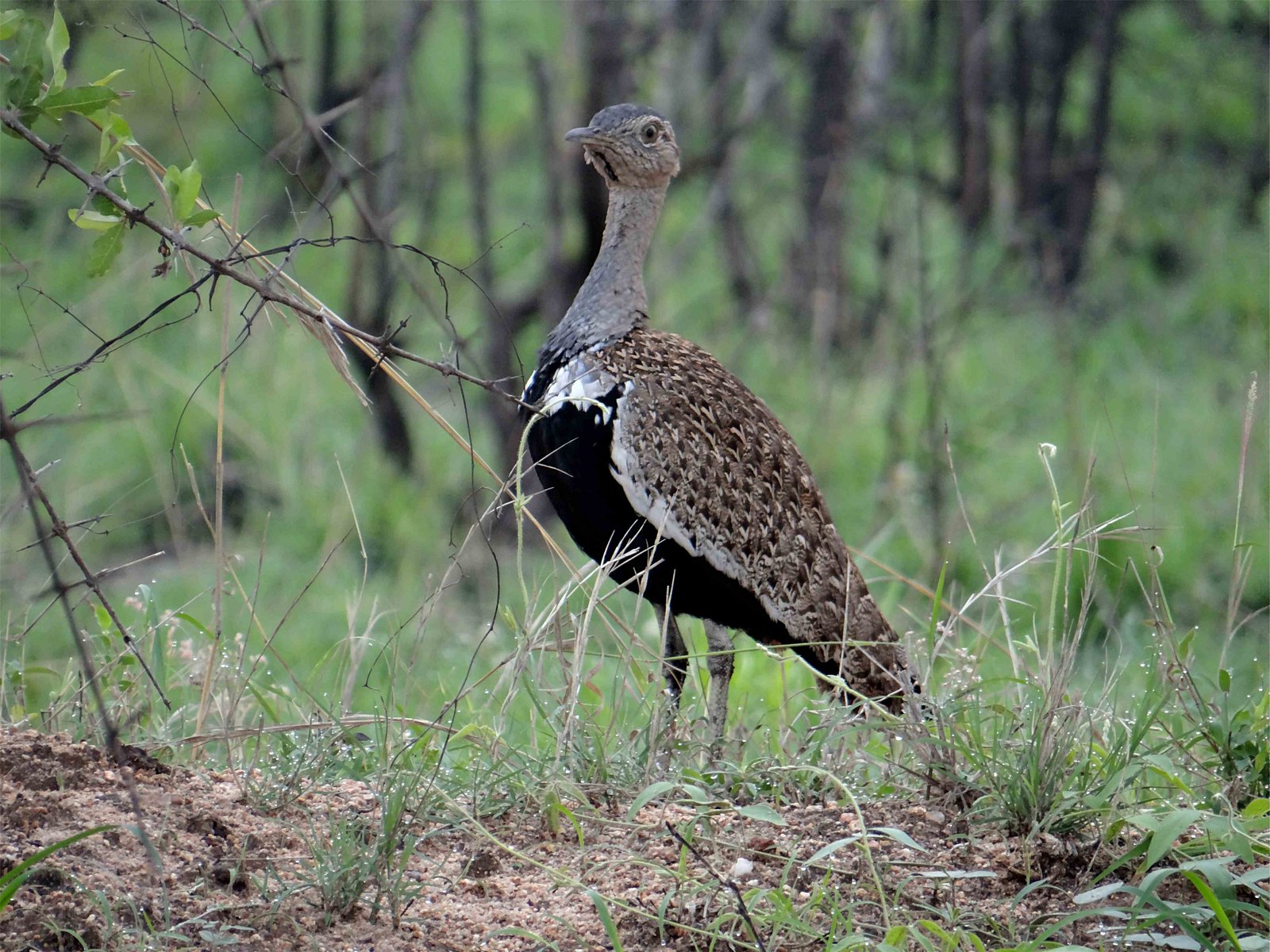
Afrotis 2 species