All species › Jacamars and puffbirds › Jacamars
Jacamars | Galbulidae
Glansvogels | Jacamares | Jacamars
Seventeen species in four genera occur in this guide; they live mainly in humid lowland forest of Amazonia and the Chocó, along forest edges and riverbanks, and a few species, such as the Coppery-chested Jacamar, inhabit the lower eastern slopes of the Andes. Jacamars are slender birds with a long, straight, needle-sharp bill, short legs with two toes forward and two back, and in most species a long tail. The upperparts gleam metallic green or bronze, while the belly is rufous or dark. They sit upright and still for long periods on an open branch, sallying out after flying insects, especially butterflies, dragonflies, wasps and bees. Back on the perch the prey is beaten against the wood to remove wings and sting. The calls are high, clear whistles and trills; the Great Jacamar gives a long, plaintive whistle. The nest is a tunnel dug by the birds into an earth bank, a riverbank or a termite nest, unlined, holding two to four glossy white eggs. Both parents incubate and feed the young. Together with the puffbirds, the jacamars form an order of their own.
Native species 17 species
Species that occur here by nature: breeding birds, winter visitors and passage migrants. They are arranged by genus, in the sequence of the list.
Brachygalba 4 species
-
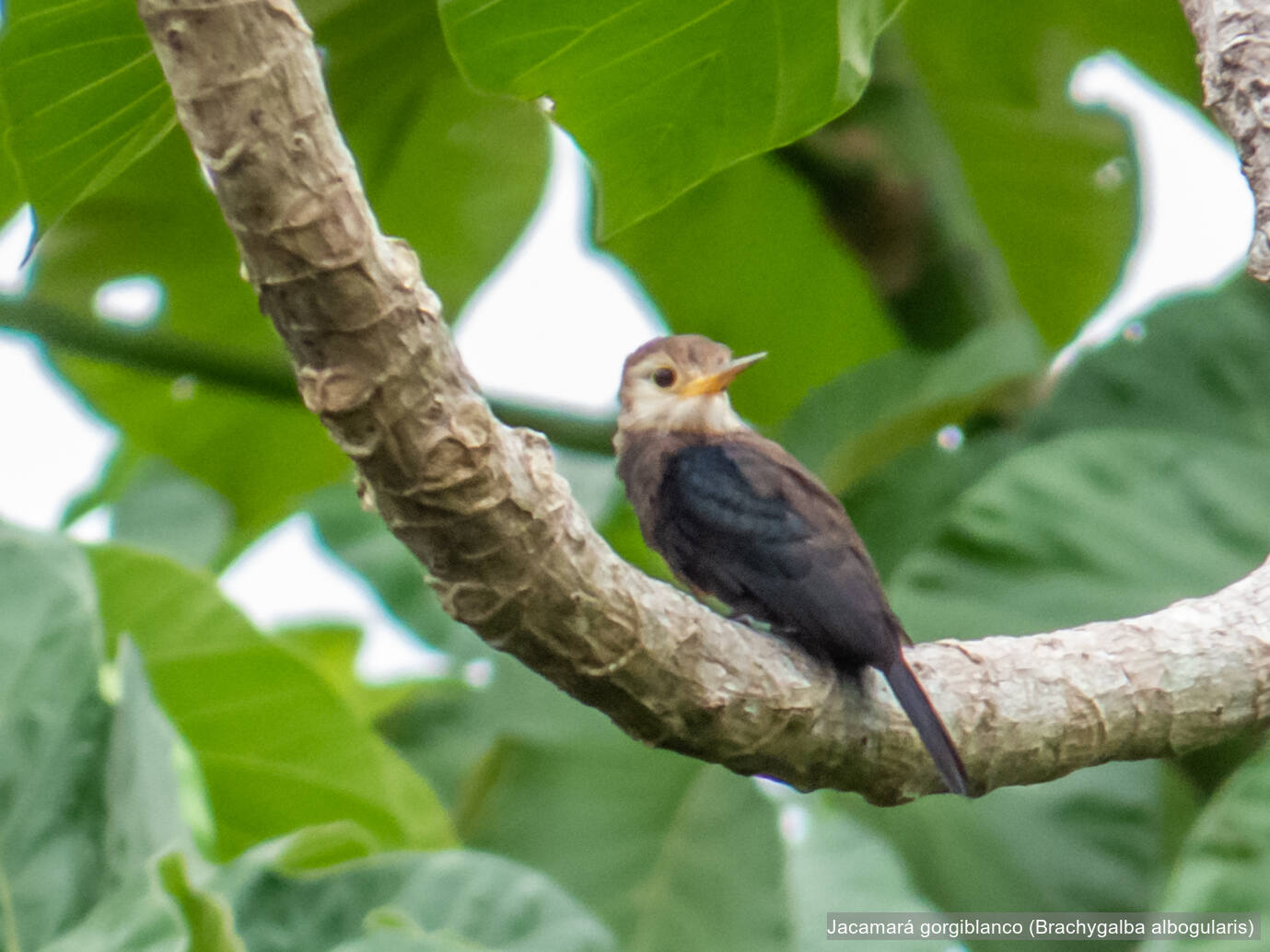
White-throated Jacamar
Brachygalba albogularis Várzea, igapó and river islands
 Secondary forest and forest edge
 Lowland rivers and sandbars
 Bamboo forest
-
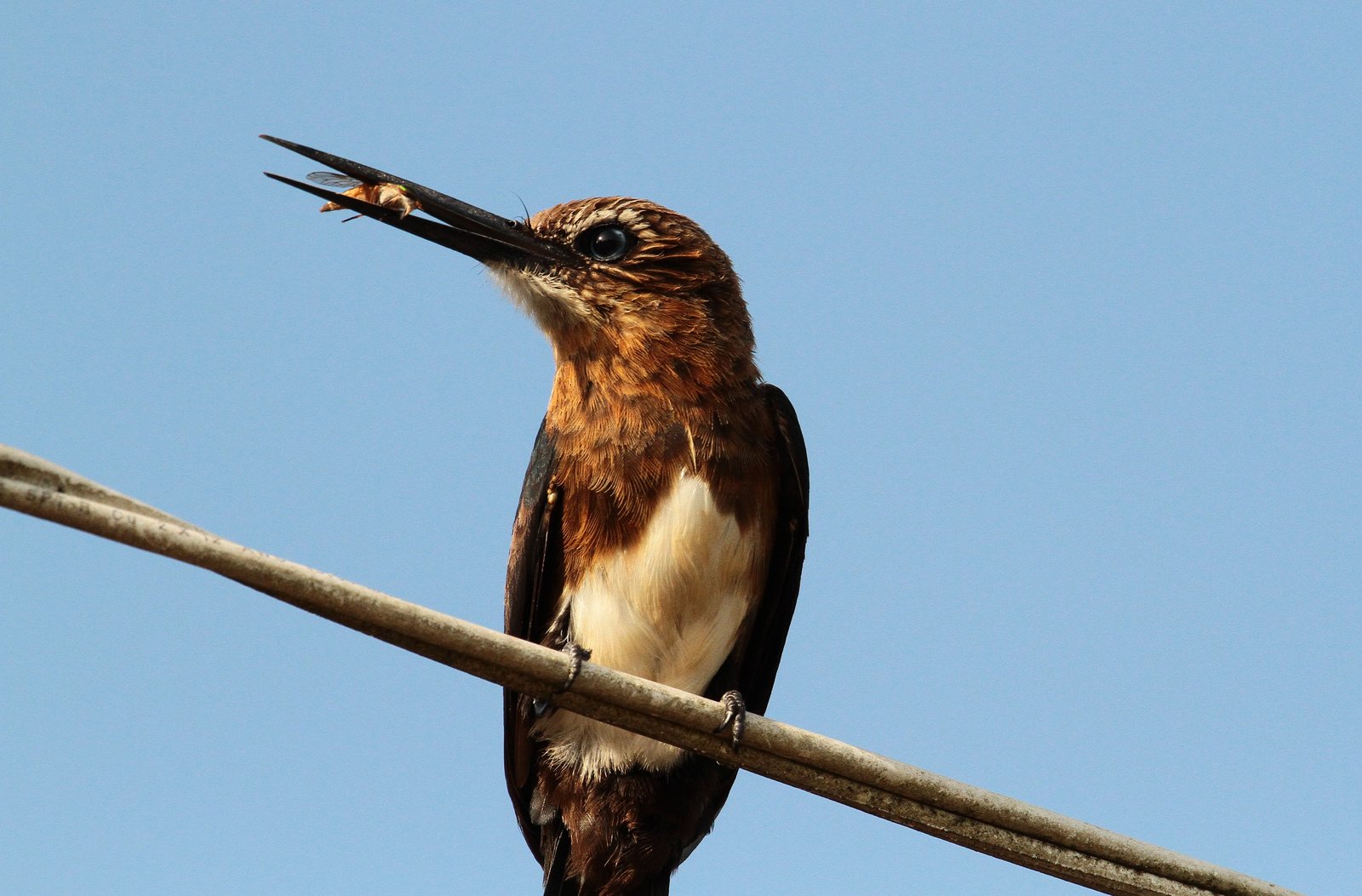
Brown Jacamar
Brachygalba lugubris- Secondary forest and forest edge
 Llanos savanna
- Várzea, igapó and river islands
- Lowland rivers and sandbars
 Beni savanna and cerrado
-

Pale-headed Jacamar
Brachygalba goeringi- Llanos savanna
- Secondary forest and forest edge
 Riparian woodland of the Andes and coastal valleys
 Pasture and ranchland
-
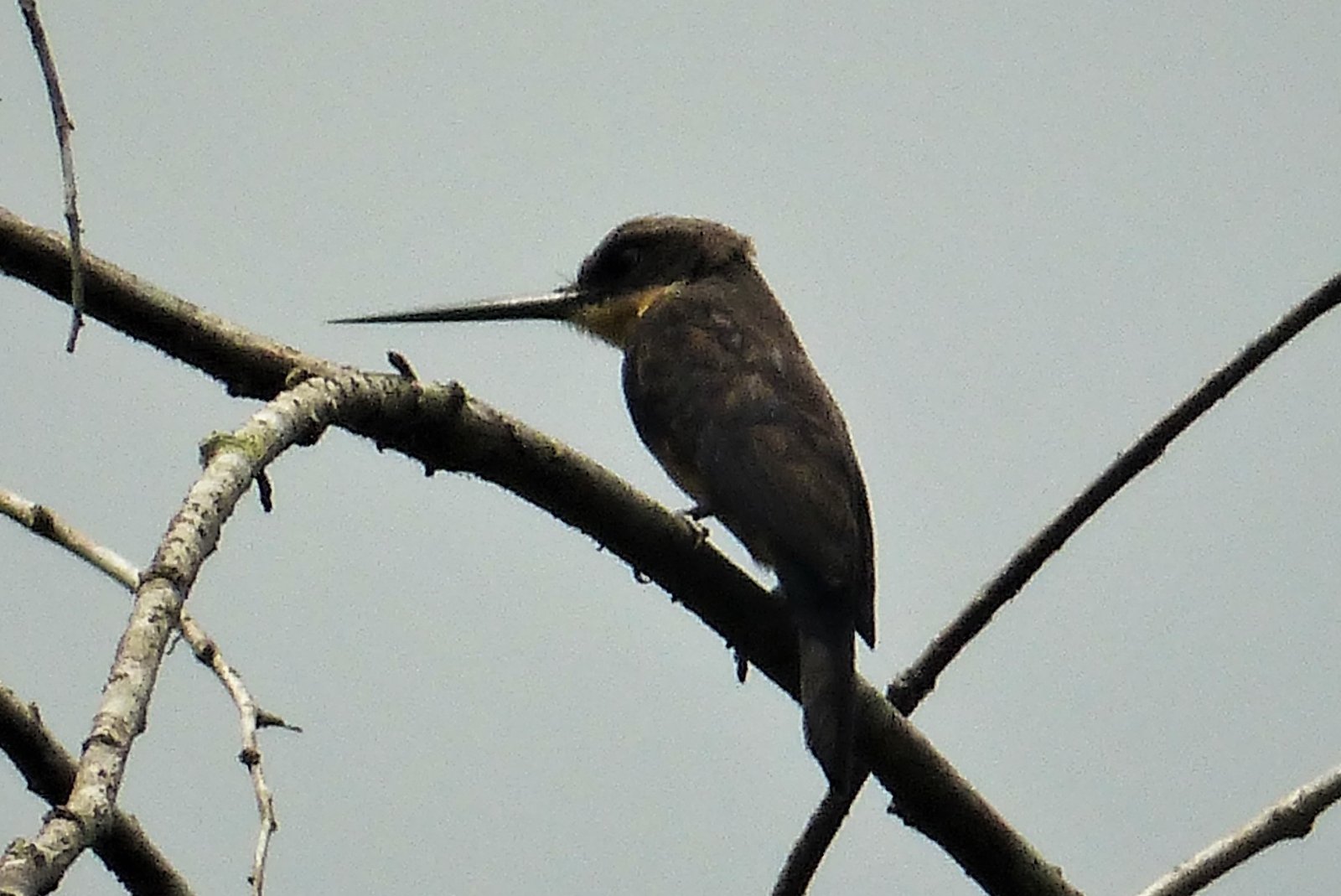
Dusky-backed Jacamar
Brachygalba salmoni Chocó rainforest
- Secondary forest and forest edge
 Andean rivers and torrents
 Coffee, cacao and agroforestry
Jacamerops 1 species
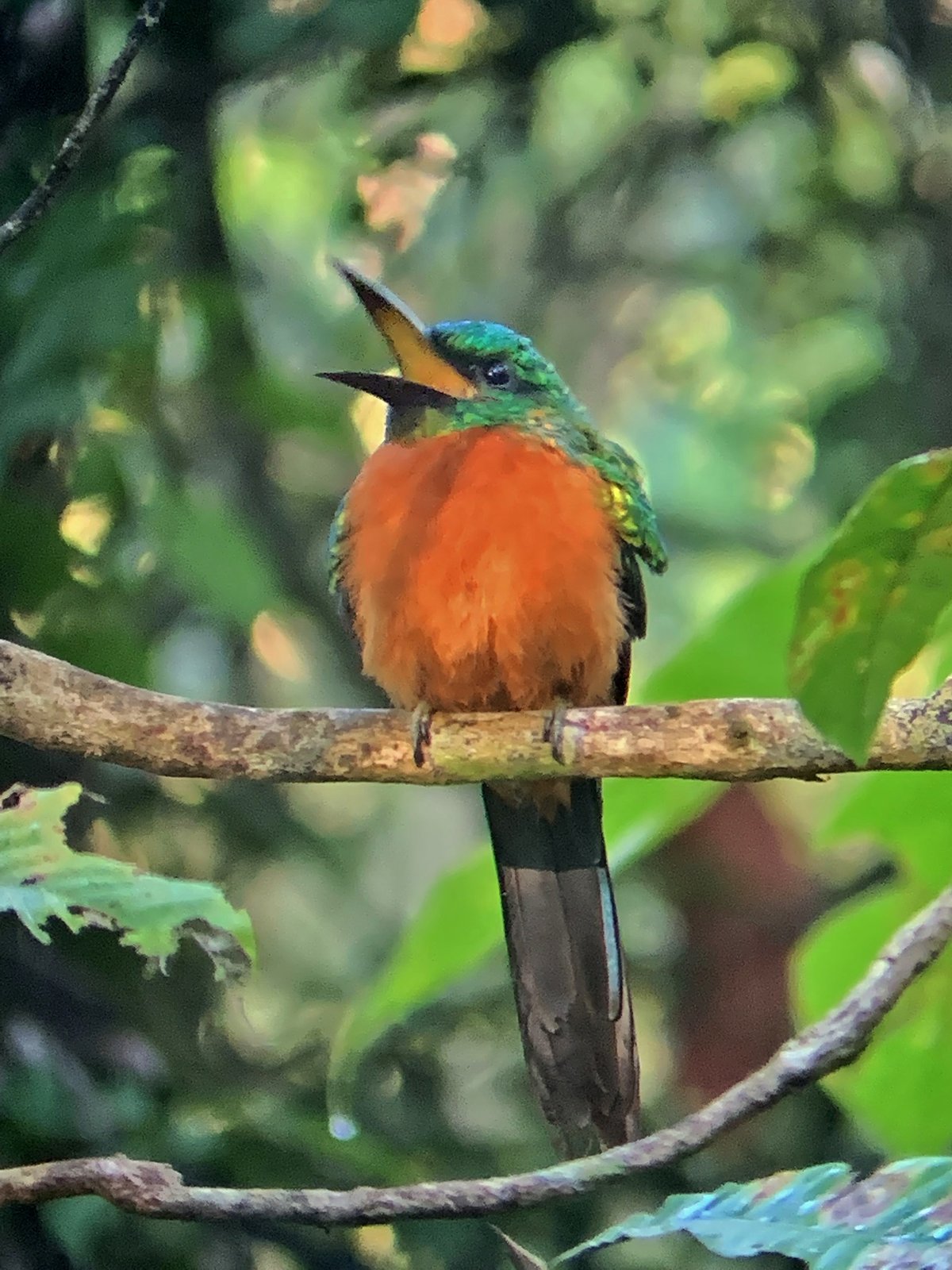
Galbalcyrhynchus 2 species
-
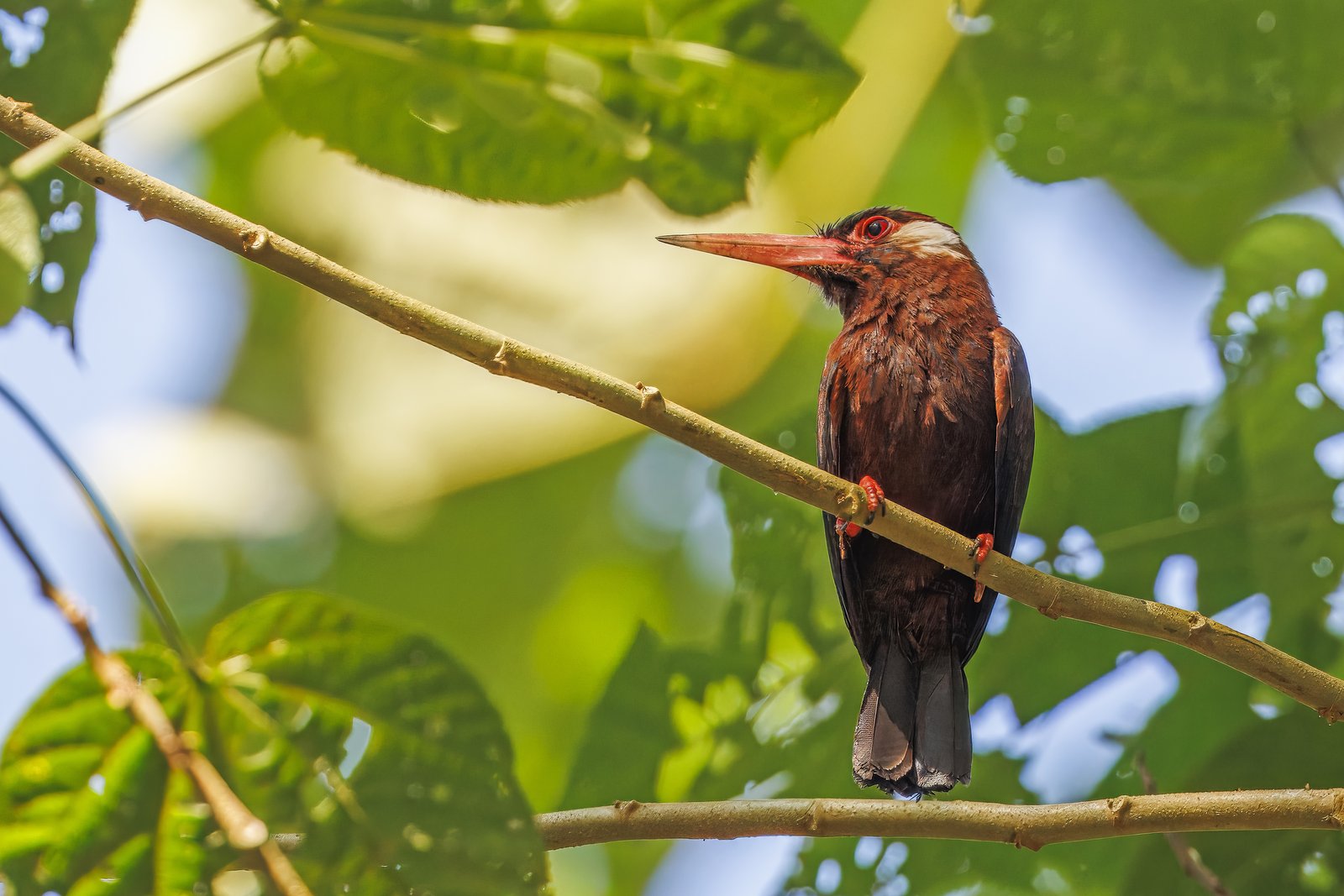
White-eared Jacamar
Galbalcyrhynchus leucotis- Várzea, igapó and river islands
 Lowland lakes and oxbows
- Lowland rivers and sandbars
 Palm swamps and swamp forest
- Secondary forest and forest edge
-
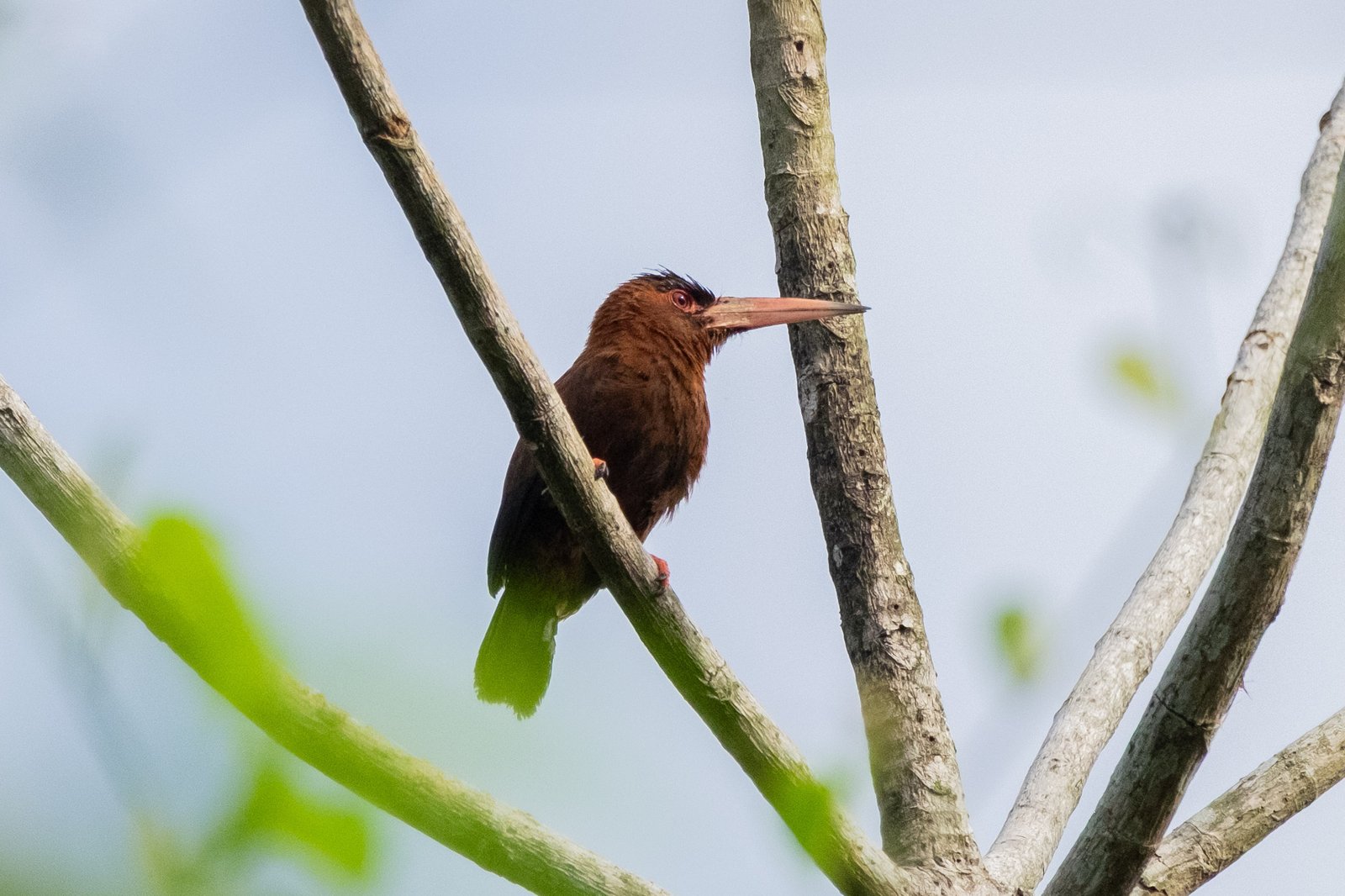
Purus Jacamar
Galbalcyrhynchus purusianus- Várzea, igapó and river islands
- Lowland lakes and oxbows
- Lowland rivers and sandbars
- Palm swamps and swamp forest
- Secondary forest and forest edge
Galbula 10 species
-
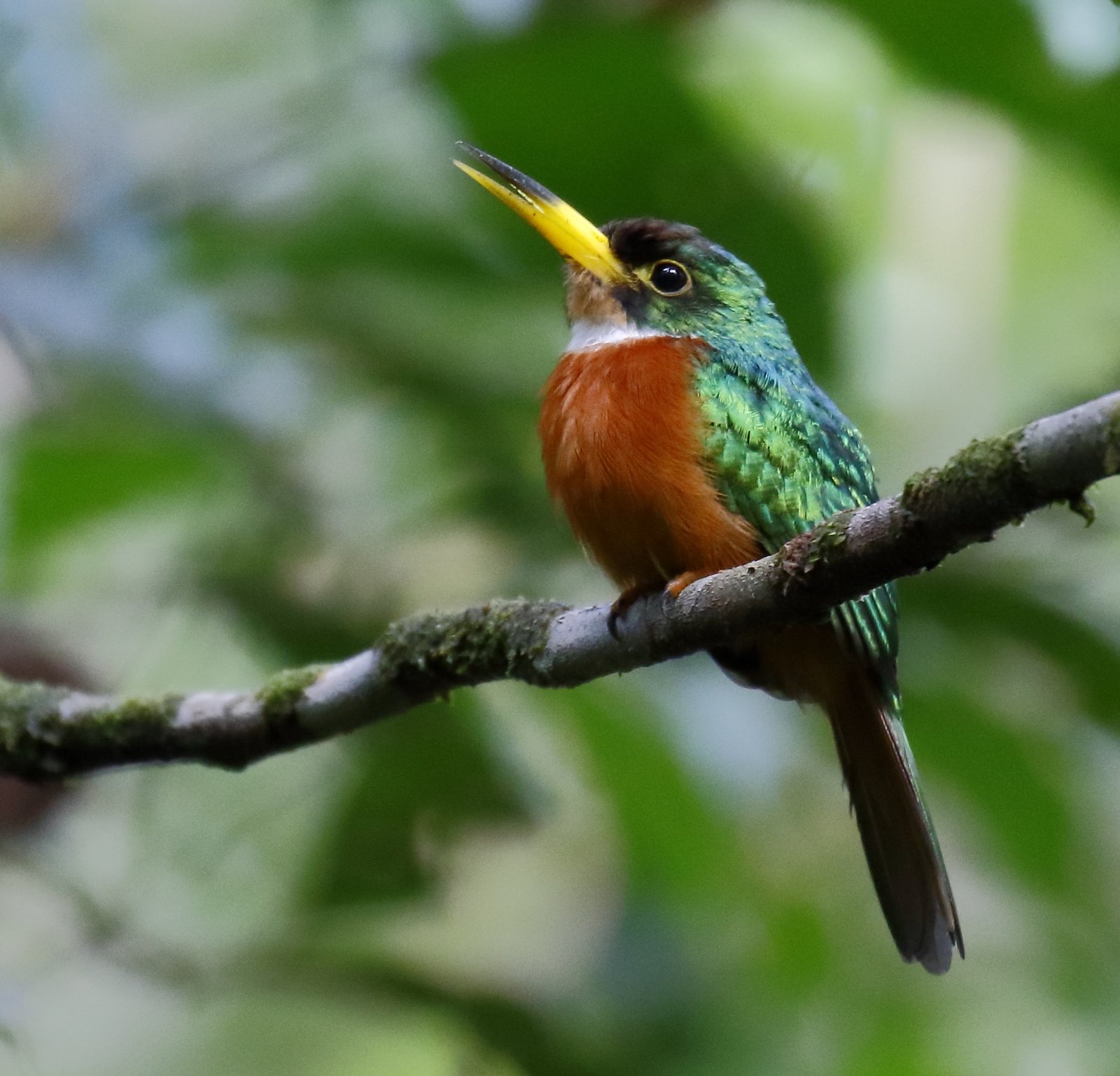
Yellow-billed Jacamar
Galbula albirostris Amazonian terra firme rainforest
 Eastern Andean foothill forest
- Secondary forest and forest edge
-
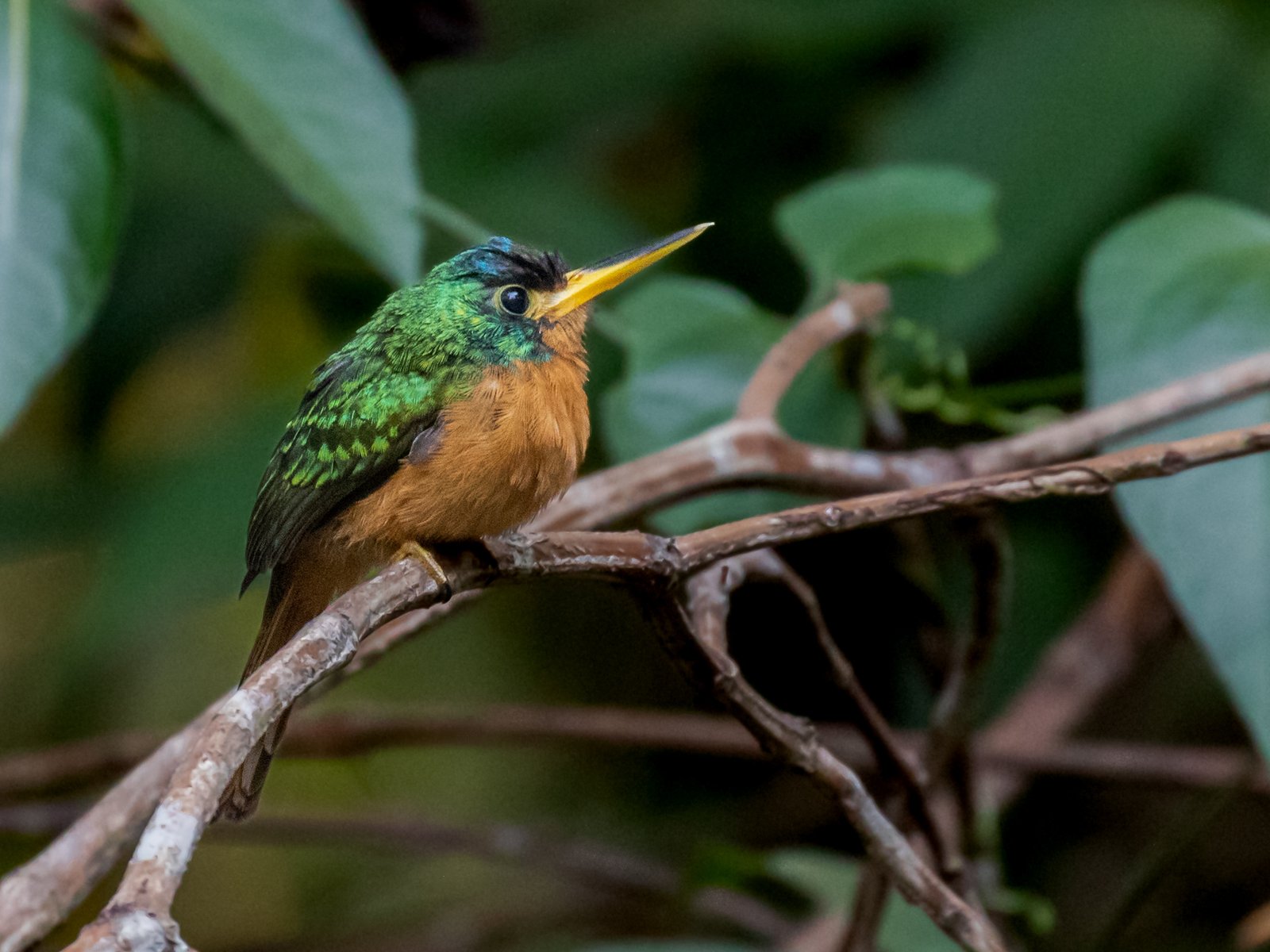
Blue-necked Jacamar
Galbula cyanicollis- Amazonian terra firme rainforest
- Secondary forest and forest edge
- Várzea, igapó and river islands
-
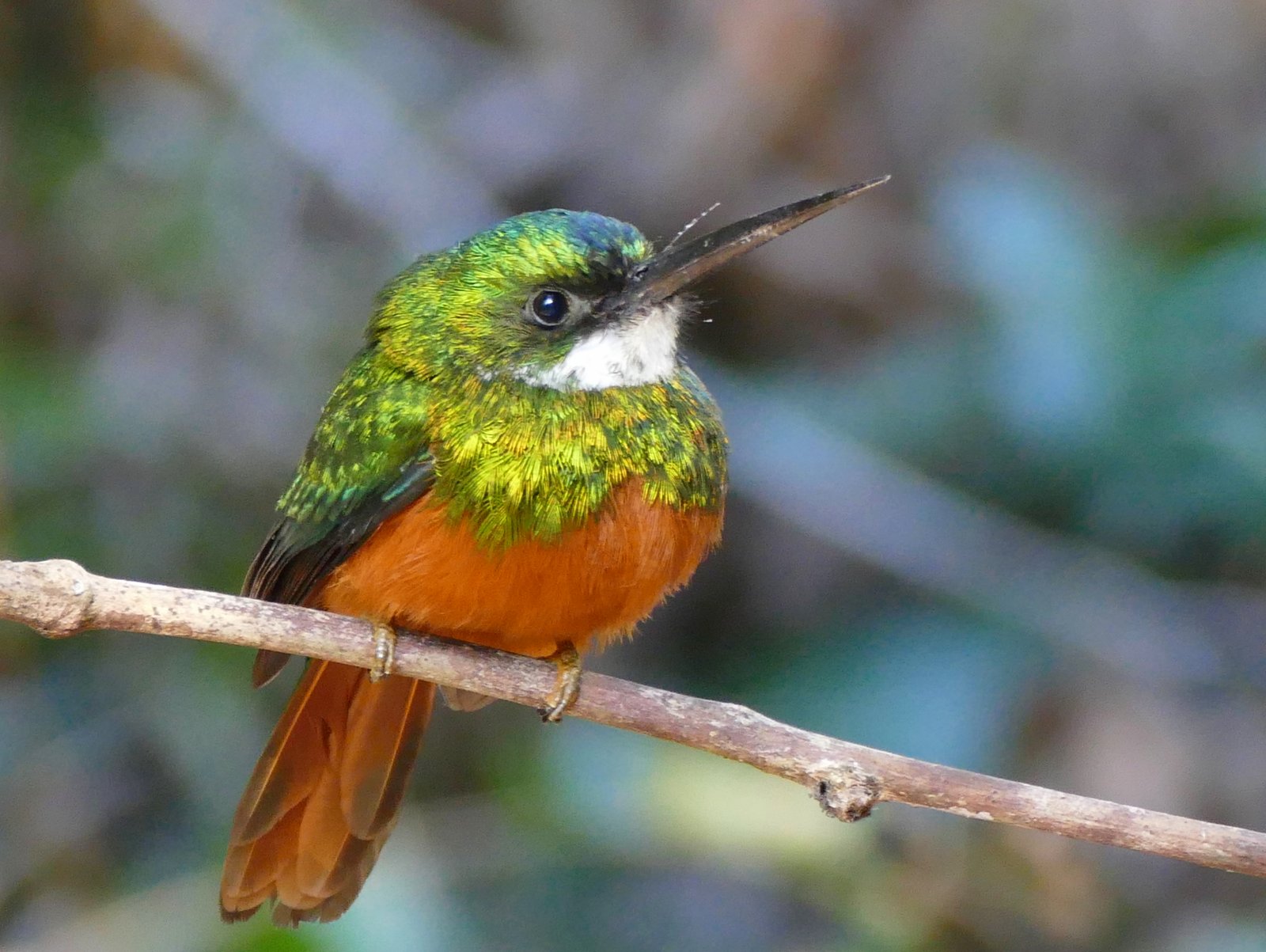
Rufous-tailed Jacamar
Galbula ruficauda- Secondary forest and forest edge
 Western Ecuador humid forest
- Chocó rainforest
 Chiquitano dry forest and Chaco
 Tumbesian dry forest and thorn scrub
- Coffee, cacao and agroforestry
-
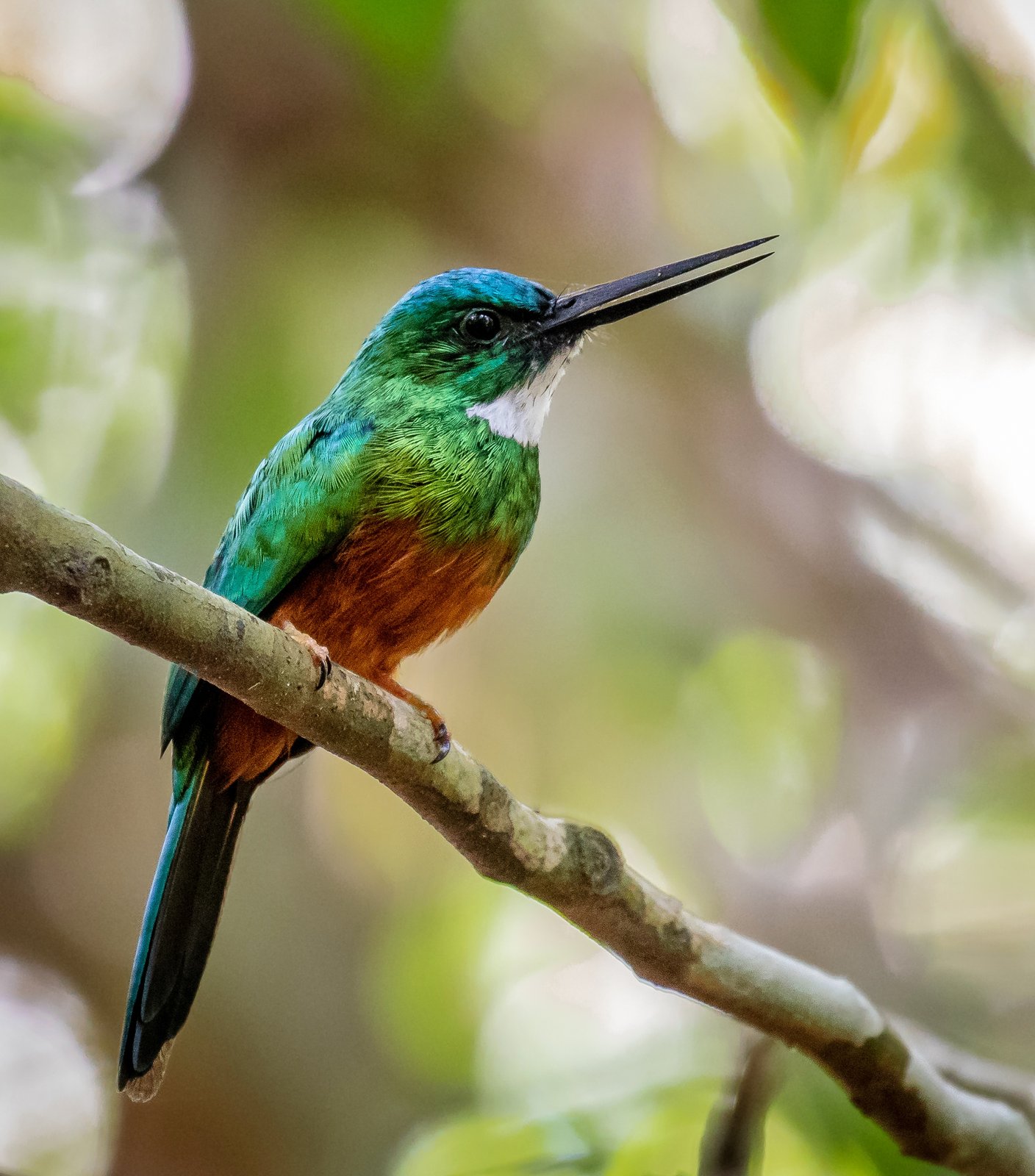
Green-tailed Jacamar
Galbula galbula- Secondary forest and forest edge
- Várzea, igapó and river islands
- Palm swamps and swamp forest
- Amazonian terra firme rainforest
-
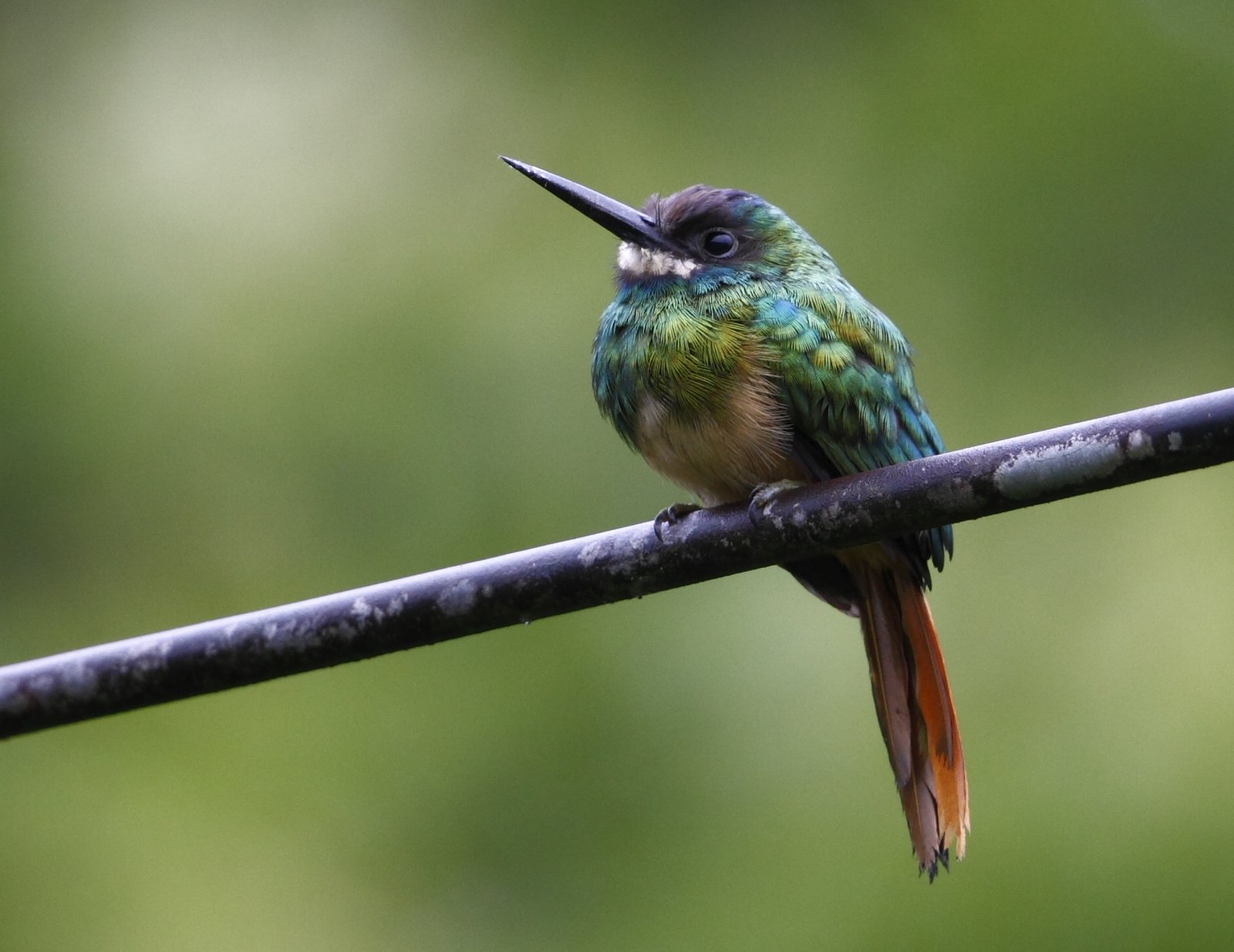
White-chinned Jacamar
Galbula tombacea- Várzea, igapó and river islands
- Palm swamps and swamp forest
- Lowland lakes and oxbows
- Amazonian terra firme rainforest
- Secondary forest and forest edge
-
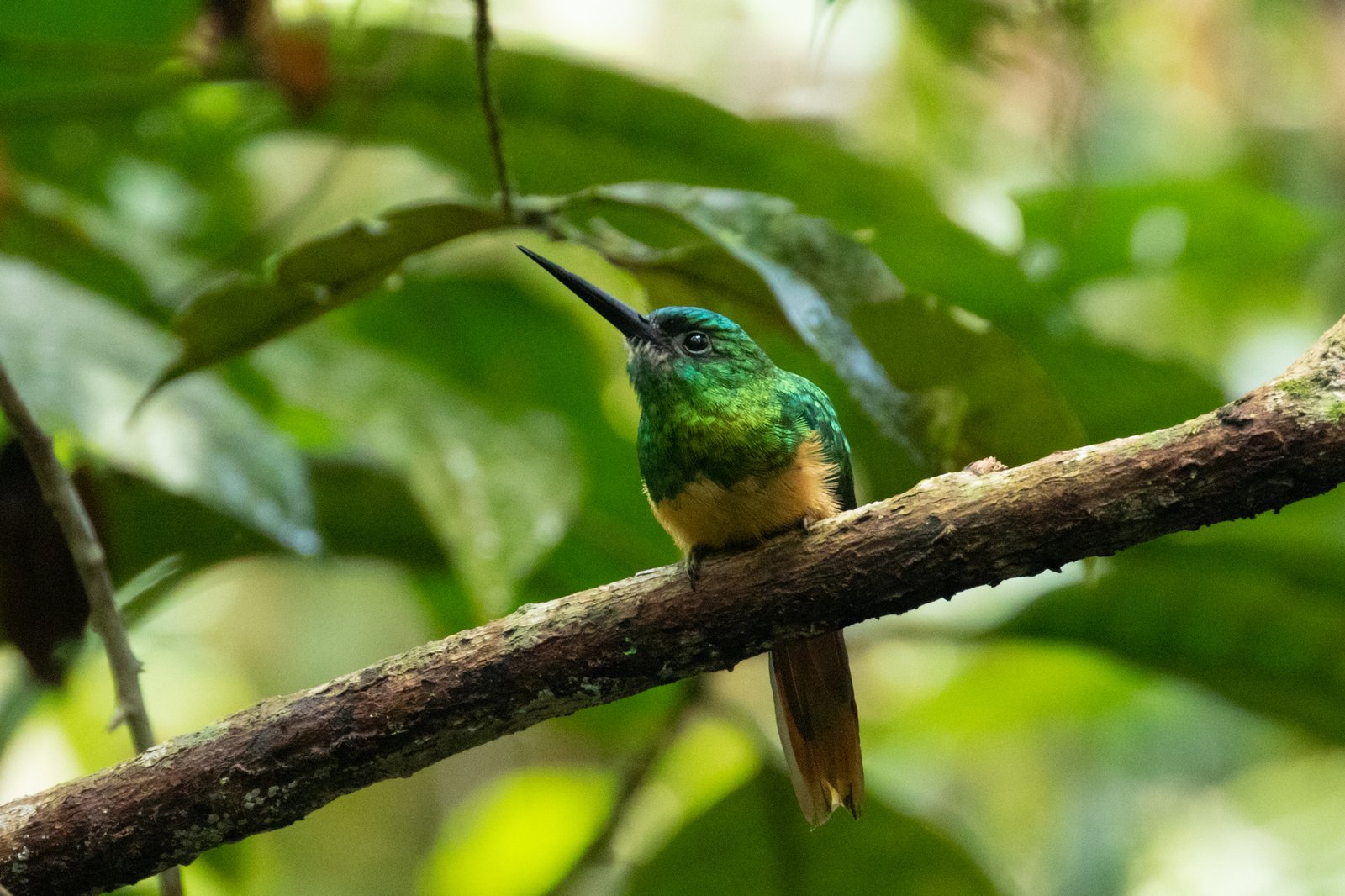
Bluish-fronted Jacamar
Galbula cyanescens- Secondary forest and forest edge
- Várzea, igapó and river islands
- Bamboo forest
- Amazonian terra firme rainforest
- Eastern Andean foothill forest
-
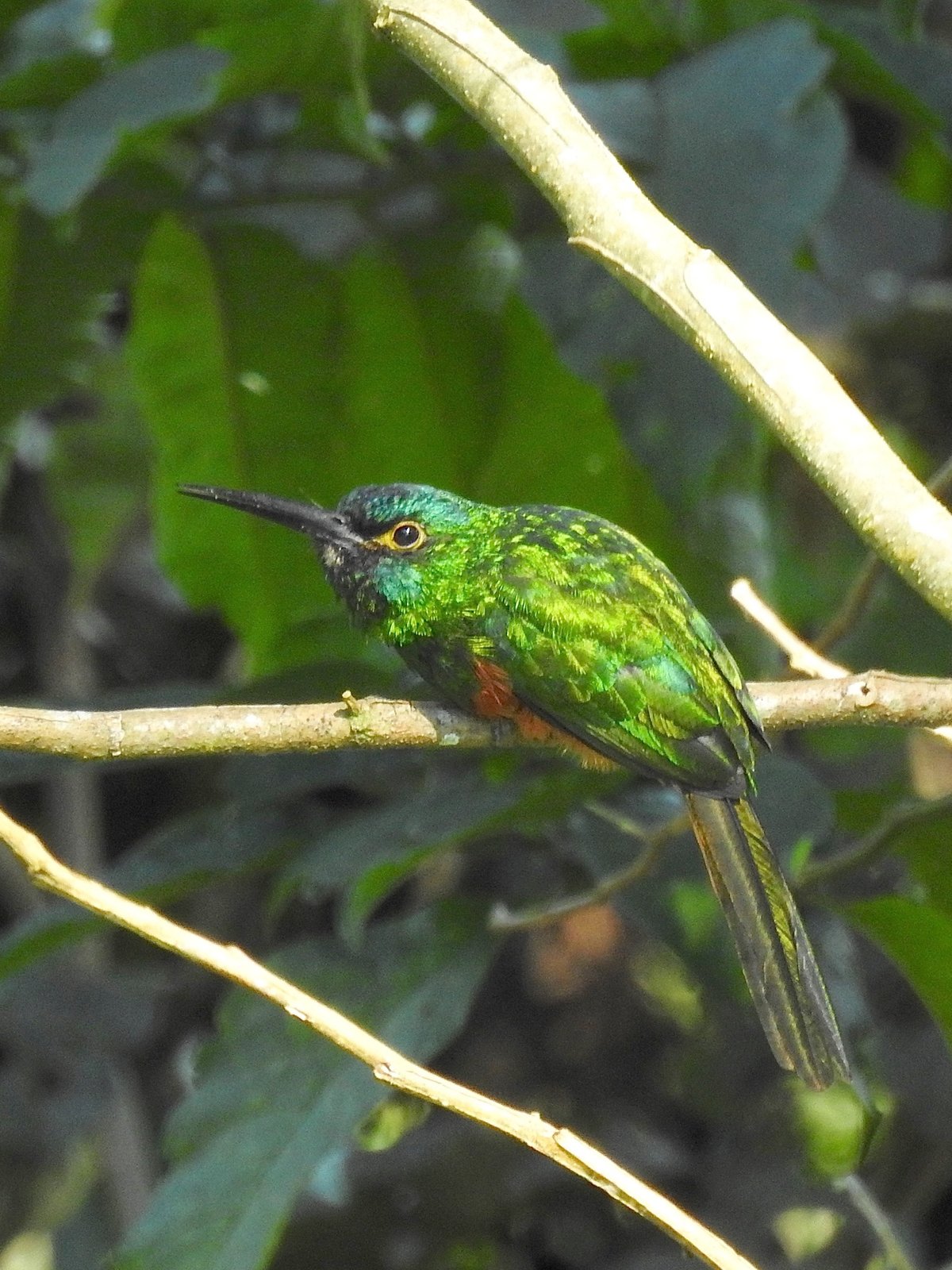
Coppery-chested Jacamar
Galbula pastazae- Eastern Andean foothill forest
 Northern Andean subtropical forest
- Secondary forest and forest edge
-
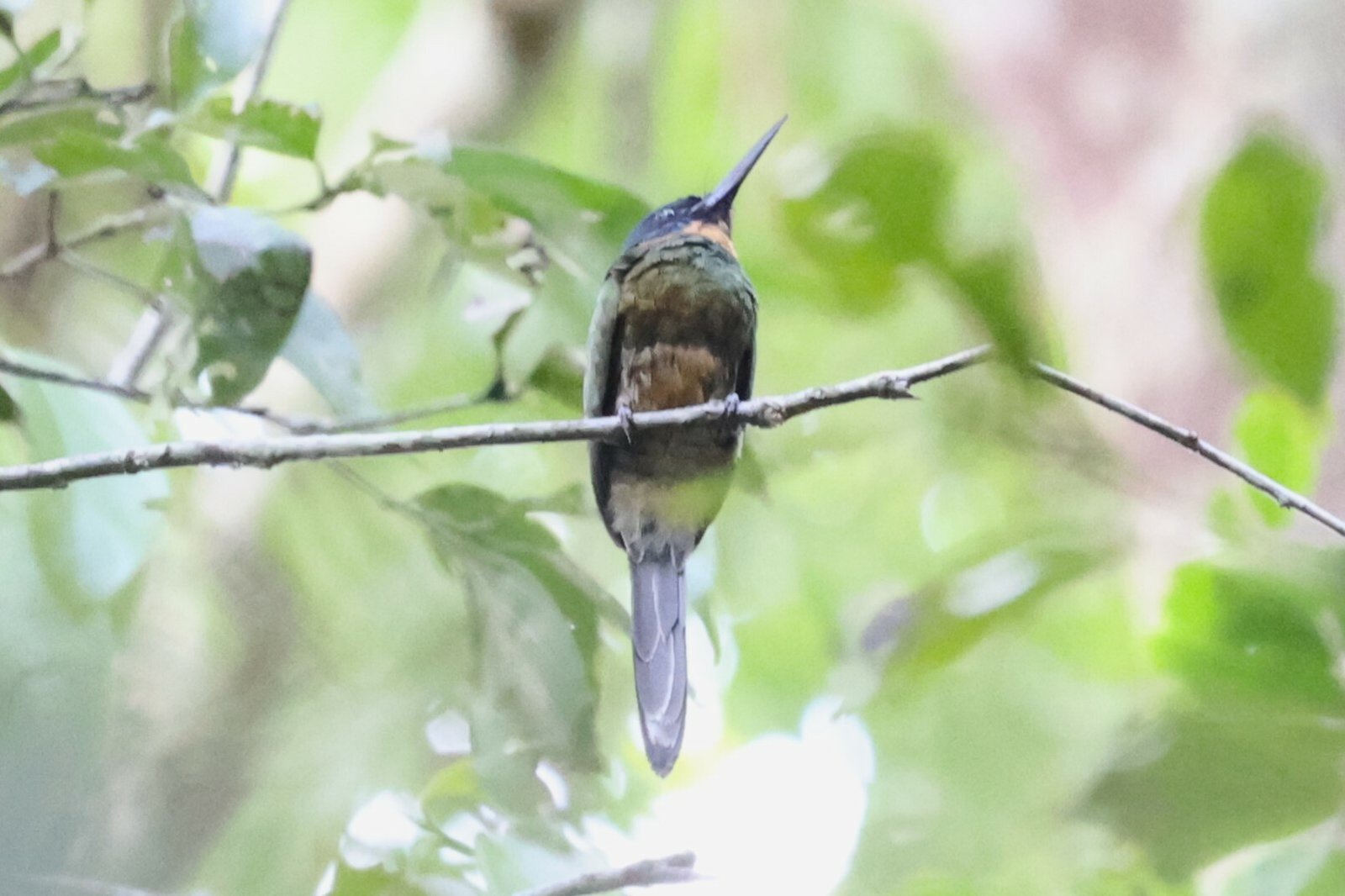
Purplish Jacamar
Galbula chalcothorax- Amazonian terra firme rainforest
- Secondary forest and forest edge
- Várzea, igapó and river islands
-
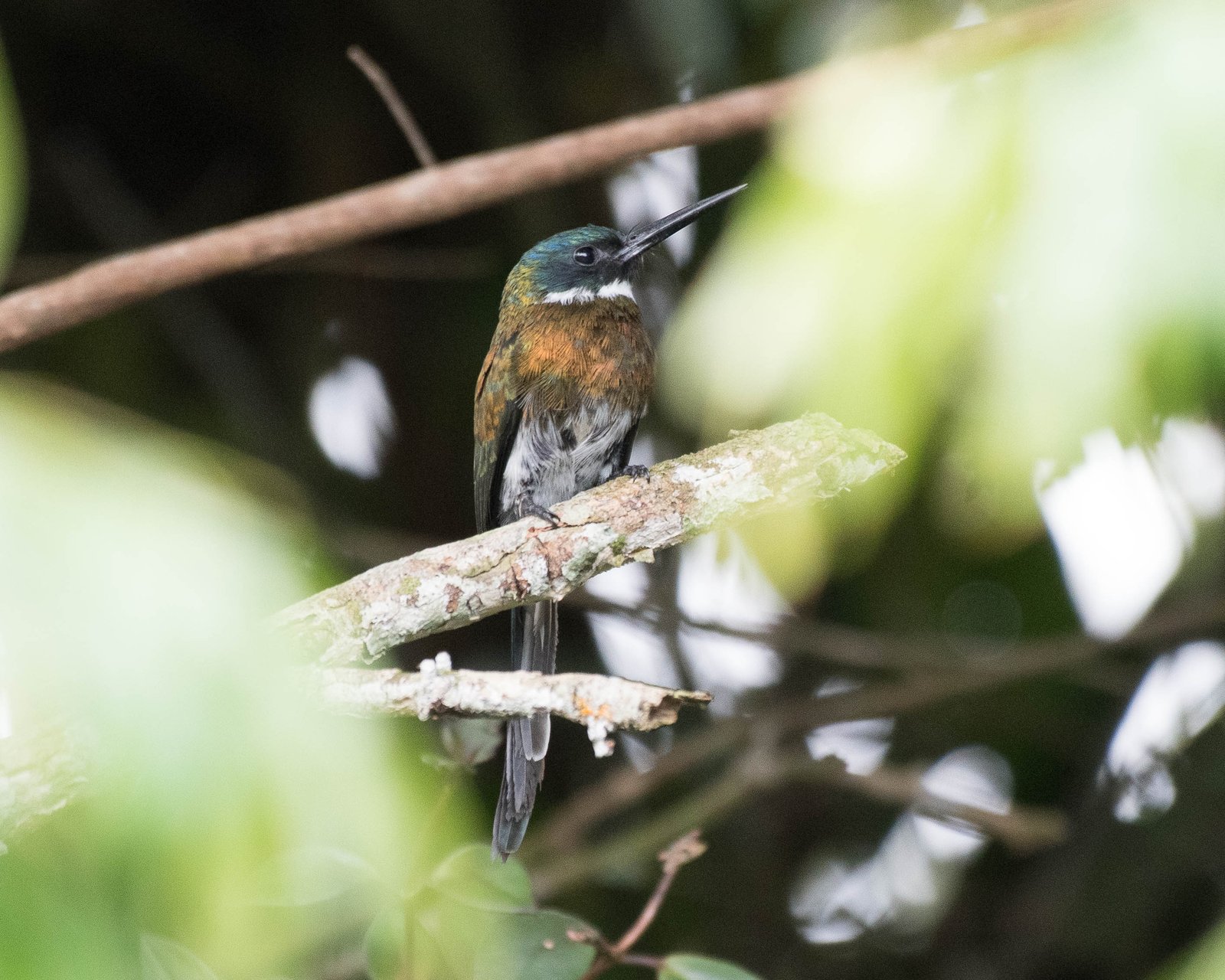
Bronzy Jacamar
Galbula leucogastra- Amazonian terra firme rainforest
- Secondary forest and forest edge
- Beni savanna and cerrado
-
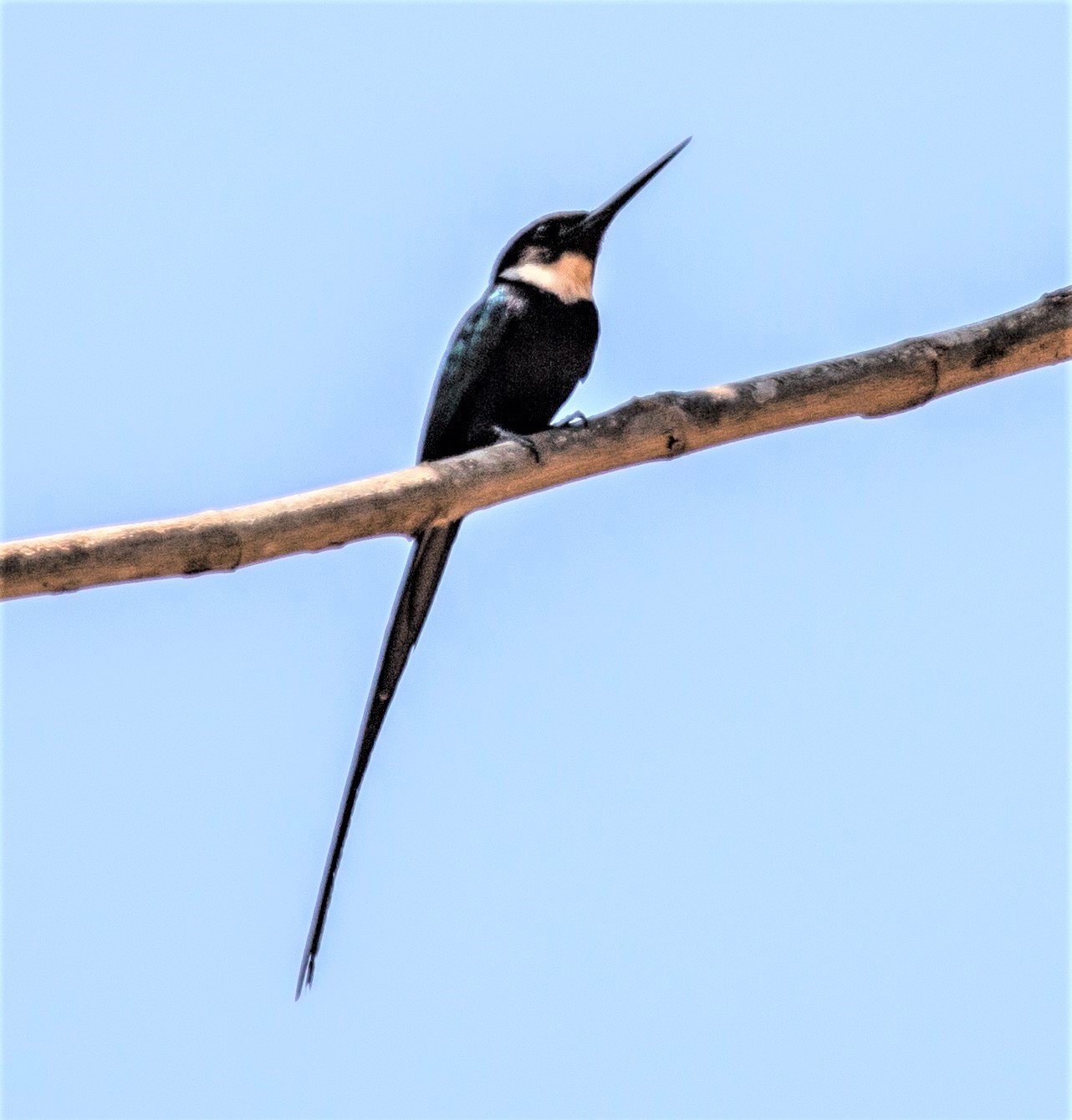
Paradise Jacamar
Galbula dea- Amazonian terra firme rainforest
- Várzea, igapó and river islands
- Secondary forest and forest edge
- Palm swamps and swamp forest