All species › Birds of prey › Hawks, eagles and kites › Eurasian sparrowhawk
Eurasian sparrowhawk | Accipiter nisus
Sperwer | Gavilán común
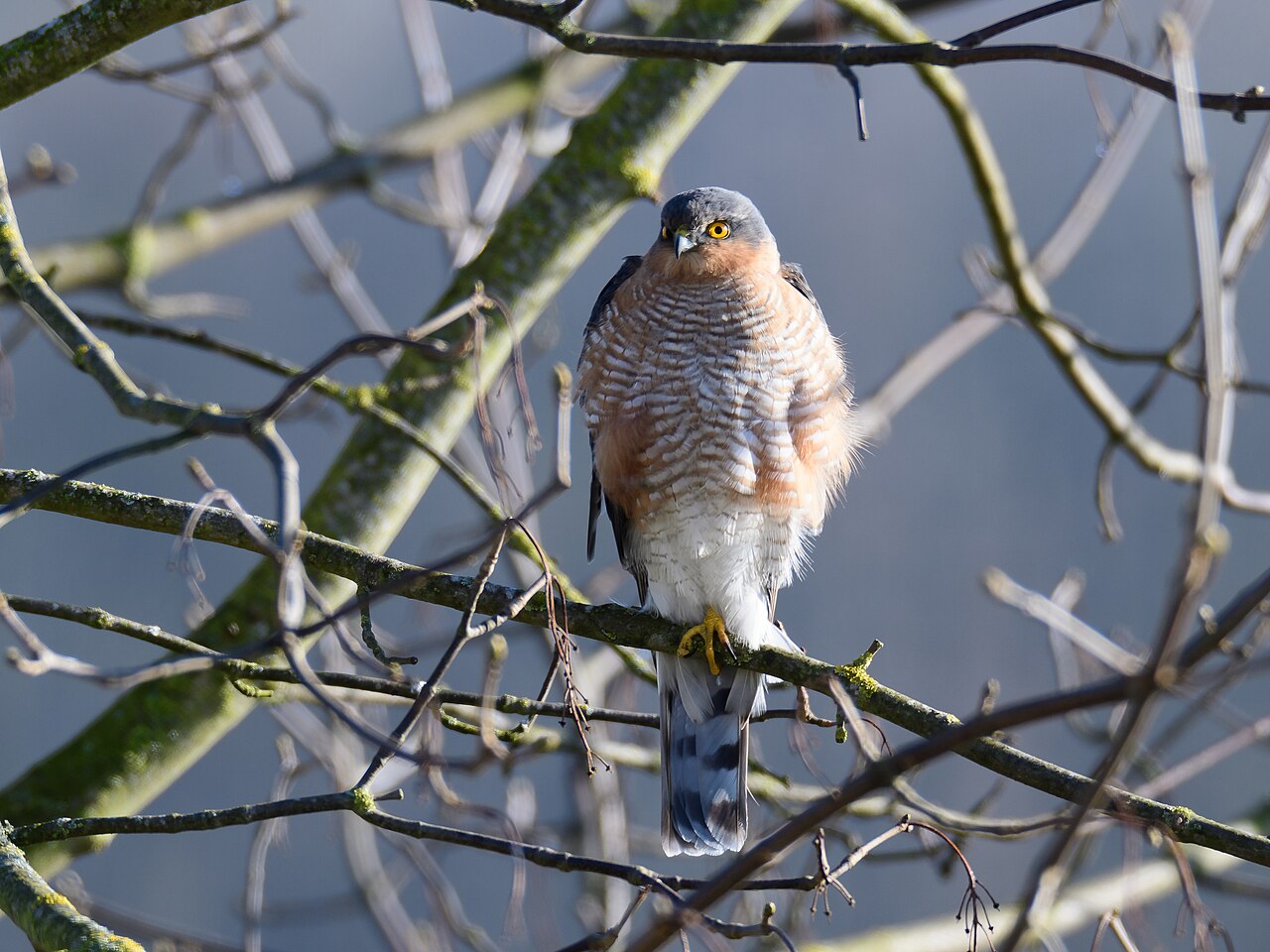
The Sparrowhawk is the bird-hunter that flicks along a hedge from nowhere and is only noticed once the tits scatter in panic. Few European raptors show such an extreme difference between the small male and the bulky female.
Click a thumbnail to switch the photo above.
Voice
A rapid, sharp chattering kek-kek-kek-kek near the nest, mainly from April to July and usually the only time you hear the species at all. Females and fledged young add a plaintive peee-oo in summer; in winter it is silent.
Recording: Alvaro Ortiz Troncoso — CC BY-SA 4.0 · Wikimedia Commons
Identification
Short, broad rounded wings, a long tail with four or five bars and a square tip, a small head and long thin yellow legs. Flight is a burst of fast beats then a glide. The male is small, slate-grey above with rufous cheeks, orange barring below and an orange-red eye. The female is much larger and brown-grey, with a white supercilium, grey barring and a yellow eye.
Confusion species
Goshawk is far bulkier, deep-chested, with a strongly projecting head, bulging secondaries and slower, deeper beats; in display it flashes fluffy white undertail coverts. A big female Sparrowhawk against a small male Goshawk is the classic trap. Cuckoo looks deceptively similar, but has pointed wings that stay below the body, a small bill, and it never soars.
Habitat
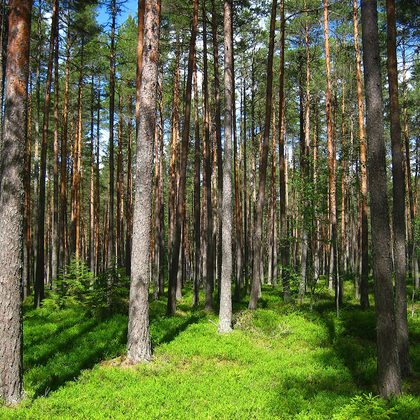
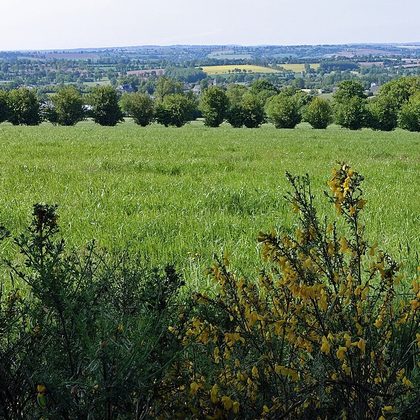
Woods and copses with dense conifers for nesting, but hunting along every line in the landscape: hedgebanks, tree-lined lanes, gardens and parks. In towns it belongs to the bird table, where sparrows, finches and doves are the prey.
Where the bird is most at home, classified with EUNIS — the European standard for habitats.


Range and movements
Breeds throughout Europe. In the Netherlands common and present all year, right into city suburbs; in October Scandinavian birds stream along the dunes and past watchpoints. In Spain it is resident in wooded hills and mountains, joined in winter by birds from central Europe.
- Resident
- Breeding (summer)
- Winter
- Passage
- dark = core range, pale = thinly spread
How and when to look
Late winter and March, on sunny mornings, when pairs circle high over the wood with white undertail coverts fanned. In winter the garden is the best hide: watch for the moment every bird falls silent at once, because he is already on the way. Coastal passage peaks in October.
Conservation status
Strongly recovered after the mid-twentieth-century crash caused by organochlorine pesticides, and now a common breeder. Local declines are reported, probably linked to fewer songbirds and more Goshawks. Window collisions and illegal persecution around pigeon lofts remain regular causes of death.
Scientific name
Accipiter nisus | (Linnaeus, 1758)
Linnaeus described the species in 1758 as Falco nisus; because it was later moved to another genus, the author and year stand in brackets. The genus Accipiter was introduced in 1760 by Brisson. Accipiter is the Latin word for 'hawk', from accipere, 'to grasp'. nisus is the Latin name of the sparrowhawk and also that of Nisus, king of Megara, who in Greek myth was turned into a sparrowhawk after his daughter Scylla cut off his purple lock of hair. The specimen the first description was based on came from Sweden.