All species › Pelicans, herons and ibises › Herons and bitterns › Great egret
Great egret | Ardea alba
Grote zilverreiger | Garceta grande
The great egret is a snow-white heron the size of a grey heron that has gone from vagrant to fixture of the Dutch winter countryside in barely thirty years. Once you have seen one standing in a ditch, the real skill is separating it from its smaller white relatives at range.
Voice
Usually silent away from the colony. When flushed and at colonies it gives a low, raw kraah or a short hoarse krrok, deeper and drier than the ringing fraank of a grey heron. At winter roosts you may hear a brief growling squabble as birds land too close to one another.
Recording: Stanislas Wroza — CC BY 4.0 · Wikimedia Commons
Identification
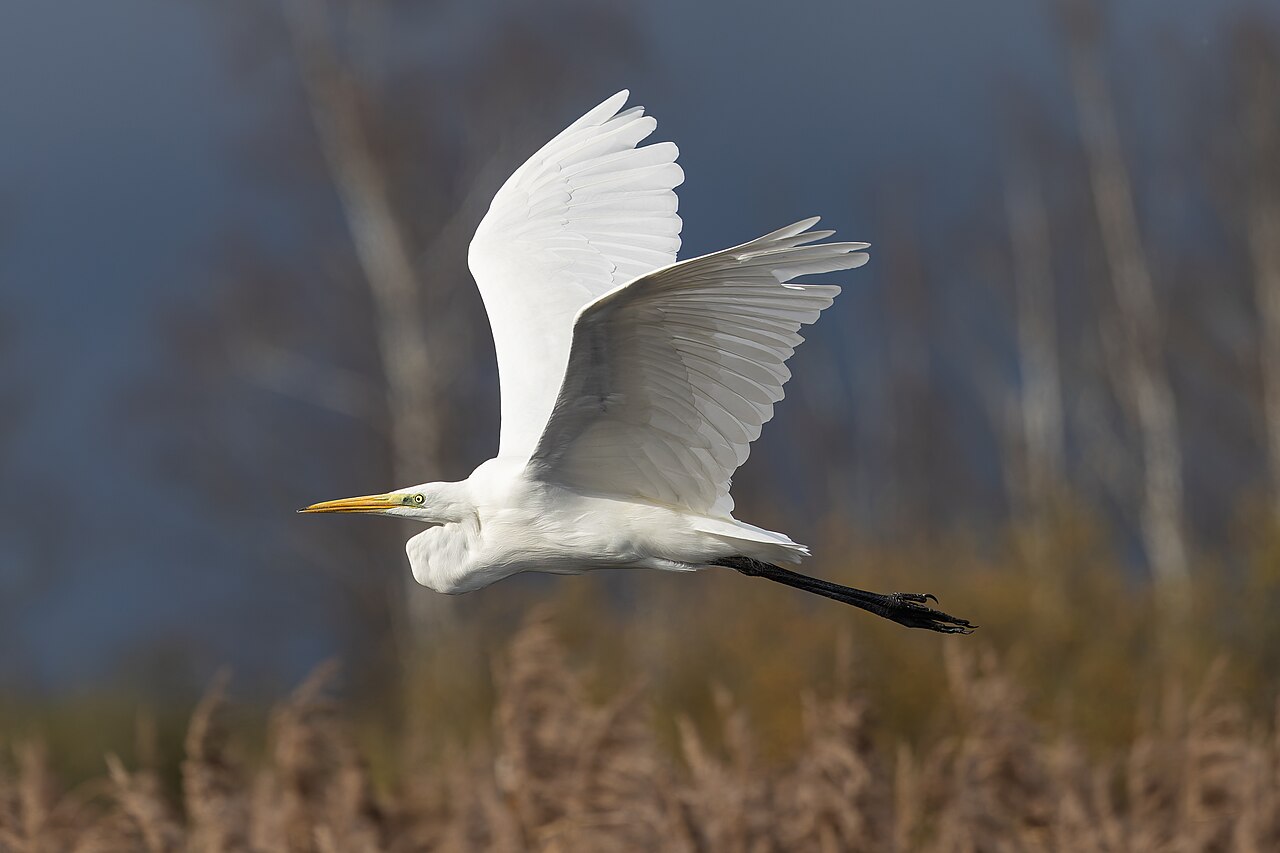
Uniformly white and crestless, with a very long neck that in rest shows a sharp, low-set kink rather than a smooth curve. The bill is bright yellow outside the breeding season and darkens to black with blue-green lores in spring; legs and toes are always black, so the toes are never yellow. Note the gape line, which runs clearly behind the eye — visible at surprising distances. In flight the impression is heavy and slow, with deep beats, the neck drawn far back into a bulging keel and the black legs projecting well beyond the tail.
Confusion species
Little egret is markedly smaller and slimmer, keeps a black bill all year and, decisively, has yellow toes on black legs; its wingbeats are quicker and looser. Cattle egret is smaller still and stocky, with a short thick neck, a jowl below the bill and a short yellow bill, and usually feeds on dry ground among livestock. Grey heron matches it in size and flight profile but is grey; juvenile grey herons in strong backlight are the classic trap, so fall back on bill and leg colour.
Habitat
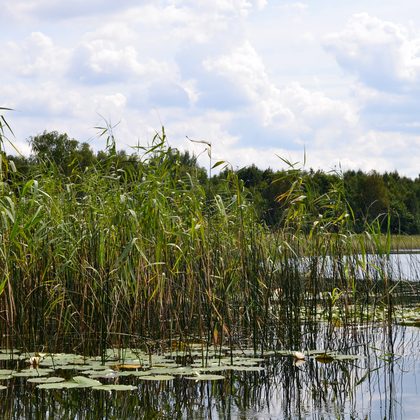
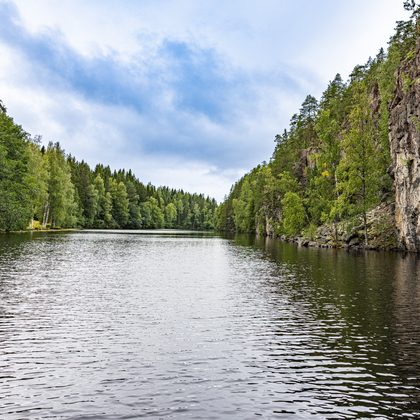
Shallow margins of marshes, lakes, creeks and reedbeds, but in winter equally along ordinary polder ditches, in wet pasture and on field edges. Hunts standing still or stalking slowly for fish, frogs and above all voles; in vole-rich winters dozens stand in grassland far from open water.
Where the bird is most at home, classified with EUNIS — the European standard for habitats.



Range and movements
Breeds in large marshes and deltas across much of the map area, from north-west Europe to eastern Europe, Turkey and the Levant; in winter also in North Africa. In north-west Europe it has bred since the first nesting in the Oostvaardersplassen in 1978, mainly in the large peat and clay marshes — Oostvaardersplassen, Lauwersmeer, Weerribben-Wieden, the Delta — and outside the breeding season it is spread across the whole lowland. In the Mediterranean region it breeds in Doñana, the Ebro Delta and the Albufera of Valencia among others, and winters in large numbers in rice fields and marismas.
- Resident
- Breeding (summer)
- Winter
- Passage
- dark = core range, pale = thinly spread
How and when to look
Drive through open polder and pasture land with plenty of ditches in north-west Europe in November or December and scan the fields: in a vole peak the birds stand like white posts in the grass, far from water. For the breeding dress with black bill and green-blue lores, visit a marsh in April, ideally at sunrise as birds fan out from the roost.
Conservation status
Not globally threatened (IUCN: Least Concern) and in Europe strongly increased and expanded westwards since the 1980s, probably driven by better protection, newly created wetland and milder winters. Prolonged hard frost remains the main brake, because it cuts the birds off from shallow water and from voles.
Scientific name
Ardea alba | Linnaeus, 1758
Linnaeus described the species in 1758 and placed it straight away in the genus where it still stands. He introduced the genus Ardea in that same work. Ardea is the Latin word for 'heron'. alba is Latin for 'white'. The specimen the first description was based on came from Europe.