All species › Waterfowl › Ducks, geese and swans › Greater scaup
Greater scaup | Aythya marila
Topper | Porrón bastardo
The greater scaup is the sea duck among Aythya, a heavy diving duck that spends the winter on big open water. On the IJsselmeer and the Wadden Sea it works mussel beds in dense, far-strung rafts.

Click a thumbnail to switch the photo above.
Voice
Largely silent away from the breeding grounds. Displaying males give a soft, dove-like cooing wah-hoo-oo with the head thrown back, and females answer with a harsh grating karr-karr-karr. In the Netherlands it is worth listening on calm sunny days in March, when wintering rafts begin to display before departure.
No freely licensed recording is available for this species yet.
Identification
Bigger and broader-beamed than tufted duck, with a rounded, crestless head and a broad blue-grey bill tipped by a small black nail. The male has a green-glossed black head, black breast and a pale grey vermiculated back that looks white at distance. The female is brown with a broad white blaze around the bill base; first-winters show that blaze narrower and duller.
Confusion species
Tufted duck is the only real trap. Look at the back: pale grey and finely vermiculated on Scaup, black on Tufted. Tufted has an angular head with a tuft or nape bump and a broad black bill tip, and female Tufted shows at most a small, ill-defined white bill base rather than Scaup's clean broad blaze.
Habitat
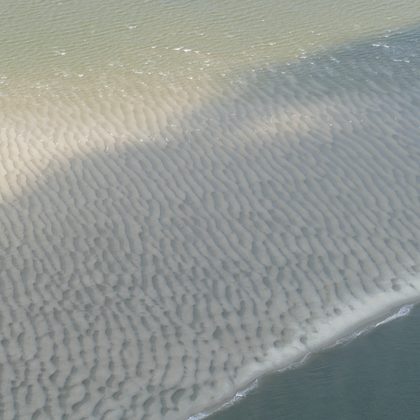
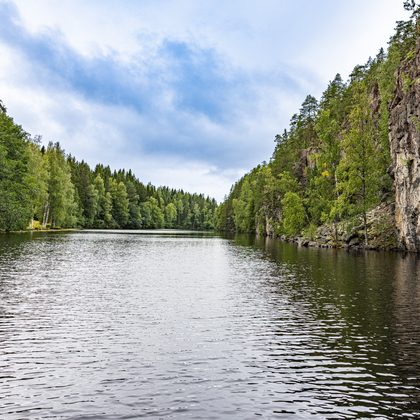
Outside the breeding season a bird of large, shallow salt and brackish water over a firm bottom: the Wadden Sea, the IJsselmeer, tidal inlets and harbour mouths. It dives for mussels, cockles and zebra mussels, usually in less than five metres. Breeds on tundra and taiga lakes and coastal lagoons in the far north.
Where the bird is most at home, classified with EUNIS — the European standard for habitats.

Range and movements
Breeds in Iceland, Fennoscandia and northern Russia. The west European wintering population concentrates in the Wadden Sea, along the Danish and German Baltic coasts and on the Dutch IJsselmeer. In Spain it is a rare vagrant, largely confined to the Cantabrian coast and the Galician rías in hard winters.
- Resident
- Breeding (summer)
- Winter
- Passage
- dark = core range, pale = thinly spread
How and when to look
Try the Afsluitdijk or the Houtribdijk in January and February, scanning early in the morning with an offshore wind when the water lies flat. Work the mussel beds close under the dyke, but expect most rafts far out, so a telescope is essential. Passage peaks in late March.
Conservation status
Numbers in north-west Europe have fallen sharply since the 1980s. Disturbance and depletion of shellfish beds, bycatch in gill nets, oil pollution and offshore wind development all press on the wintering flocks, while predation pressure affects the breeding grounds. Milder winters are also shifting the wintering centre of gravity north-eastward.
Scientific name
Aythya marila | (Linnaeus, 1761)
Linnaeus described the species in 1761 as Anas marila; because it was later moved to another genus, the author and year stand in brackets. The genus Aythya was introduced in 1822 by Boie. Aythya is from Greek aithuia, an unidentified diving seabird mentioned by Aristotle and Hesychius. marila is Greek for 'charcoal embers' or 'coal dust'. The specimen the first description was based on came from Lapland.