All species › Waders, gulls and terns › Pratincoles and coursers › Oriental pratincole
Oriental pratincole | Glareola maldivarum
Oosterse vorkstaartplevier | Canastera oriental
The eastern counterpart of collared pratincole and the hardest of the three to pin down. It hawks insects like an oversized swallow over wet ground, on long pointed wings, then drops onto bare mud and sits so low that it disappears.

Voice
A hard tern-like chik-chik and a rattling kirri-kirri, almost always in flight and often in chorus as a party lifts off. Drier and sharper than collared pratincole, but the margin is too narrow to identify a bird on voice alone.
Recording: Sudipto Roy — CC BY-SA 3.0 · xeno-canto
Identification
Olive-brown above, white below, with a warm orange wash across the lower breast that fades onto the flanks. The throat is a rich buff-ochre, neatly ringed by a narrow black border, and the bill is black with a red base. Rump white, tail black and only shallowly forked. The critical structural point at rest is that the wing tips project clearly beyond the tail tip. In flight the underwing coverts are chestnut and there is no white trailing edge to the secondaries.
Confusion species
Against collared pratincole the differences are tail length and trailing edge: on that species the tail streamers reach or exceed the wing tips and the secondaries show a clean white trailing edge, which Oriental lacks. The chestnut underwing is shared and so settles nothing between those two. Against black-winged pratincole the underwing is the decider, black on that species and chestnut on Oriental, while both lack the white trailing edge. The throat border also helps: Oriental has an orange-ochre throat inside a narrow, crisply drawn black line, Collared a creamier yellow throat with a finer border, and Black-winged a paler throat with a heavier border and no white eye-ring.
Habitat
Breeds on bare, drying ground: saline steppe, receding lake shores, river beds and fallow fields, always with open sightlines and next to no vegetation. Outside the breeding season it hunts over ricefields, wet grassland and tidal flats, often in enormous flocks following insect swarms. Birds reaching Europe are usually found on a bare, wet field margin or a freshly ploughed field beside water.
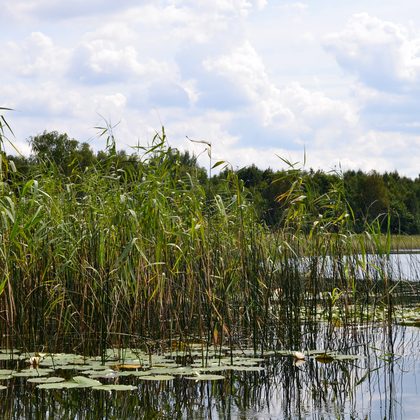
Where the bird is most at home, classified with EUNIS — the European standard for habitats.



Range and movements
Breeds from Pakistan and northern India east through China to Manchuria and the Philippines, and winters in South-East Asia and northern Australia. Its true abundance there became clear in February 2004, when more than two and a half million were counted at Eighty Mile Beach in Western Australia. In Europe it is a major rarity, with almost all records in Britain — mainly on the south and east coasts, starting with a first bird in 1981 — and the odd record elsewhere around the North Sea; the first Dutch bird, in 1997, was initially mistaken for a Collared Pratincole.
How and when to look
Every pratincole here deserves a check of tail length, underwing and trailing edge, because the three species are regularly confused. Photograph the bird in flight if you can: the underside with the arm sharp settles chestnut against black. Some birds linger for weeks in the same spot, so a settled-looking bird is worth a second visit for better flight views. In Spain the rice fields and marshes of the Guadalquivir, the Ebro delta and the Albufera are the best places to look in May and June.
Conservation status
Not globally threatened, with a population in the millions, but the trend is downward. The main pressures are the conversion of seasonal wetlands and drying lake shores to intensive agriculture, and insecticide use across the wintering range, where the birds live almost entirely on flying insects.
Scientific name
Glareola maldivarum | Forster, 1795
Forster described the species in 1795 and placed it straight away in the genus where it still stands. The genus Glareola was introduced in 1760 by Brisson. Glareola is a Latin diminutive of glarea 'gravel', after the bare gravelly ground where pratincoles nest. maldivarum means 'of the Maldives', after the sea off those islands, the type locality. The specimen the first description was based on came from the open sea off the Maldives.