All species › Waders, gulls and terns › Sandpipers and snipes › Wilson's snipe
Wilson's snipe | Gallinago delicata
Amerikaanse watersnip | Agachadiza de Wilson
Wilson's snipe was split from common snipe in 2002, and since then snipe in western Europe have been checked in autumn for a bird with sixteen tail feathers. That character is almost never on show in the field, so the species probably occurs more often than the number of records suggests.
Voice
On flushing a sharper, higher, drier ketch than the hoarse scaap of common snipe, but the difference is too slight to build a record on. The display is more distinct: the bleating hum of the vibrating outer tail feathers is pitched higher, runs faster and sounds harder, closer to a rapid woo-woo-woo-woo than to the slow bleat of common snipe.
Recording: Doug Hynes — CC BY-SA 4.0 · Wikimedia Commons
Identification
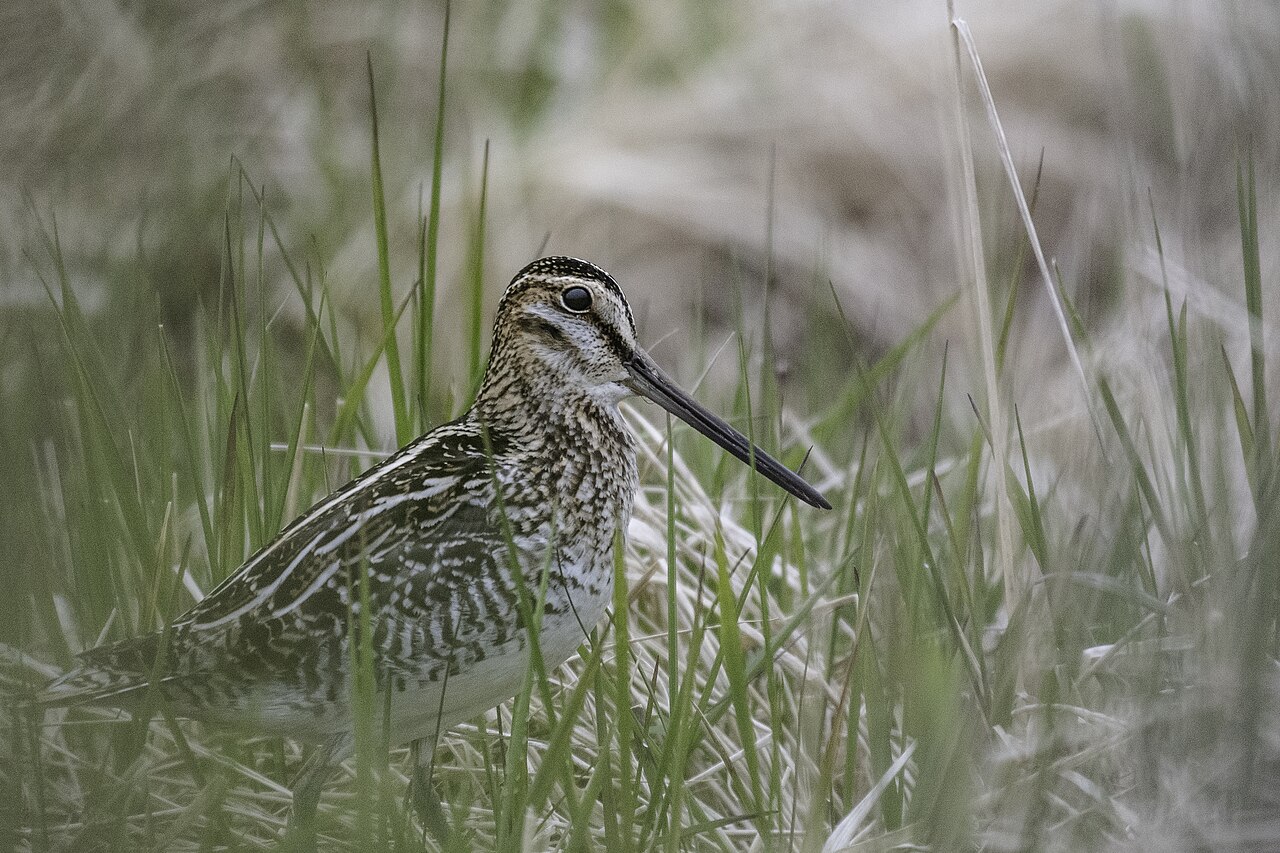
At range it is a common snipe: the same dumpy build, the same very long straight bill, the same four cream braces down the back. Close to, it looks colder and greyer, with less warm rufous in the head and mantle pattern and white rather than buff fringes to the wing coverts. The tail holds sixteen feathers instead of fourteen, and the outermost are narrower, more heavily barred and show less white.
Confusion species
Common snipe is the only candidate, and the difference comes down to feathers you have to count. Count the rectrices: eight pairs on Wilson's, seven on Common. In flight, watch the narrower white trailing edge to the secondaries, a bold white line on common snipe but no more than a thin edge here. Watch too for darker axillaries and underwing coverts, where the dark bars are broader than the white ones. In practice this often cannot be settled in the field: most accepted records rest on photographs of a spread tail or of a bird stretching.
Habitat
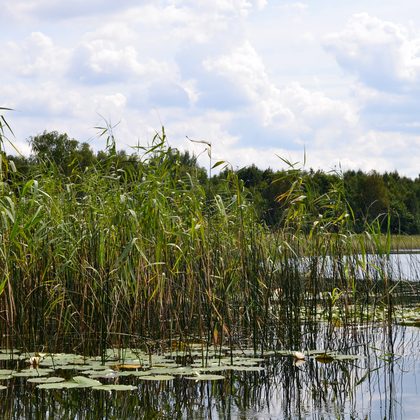
In Europe it turns up in exactly the ground common snipe uses: ditch banks, shallow floods, waterlogged pasture and flooded stubble with cover within a few metres. In North America it breeds in sedge marsh, bog, willow and alder swamp and wet meadow, and winters as far as rice and sugarcane fields.
Where the bird is most at home, classified with EUNIS — the European standard for habitats.



Range and movements
Breeds from Alaska and Canada south into the northern United States and winters from the southern States to northern South America. Inside the map area a vagrant: close to annual in the Azores in autumn, and regular on the British Isles since the first record on the Isles of Scilly in 1998, many of them long-staying birds that hold a single pool for months.
How and when to look
Work a long-staying wintering bird in the south-west of the British Isles — Cornwall, Ireland — and give it time; wait until it stretches or preens, because only then does the tail spread. Photograph every snipe that flushes, from the side and from below: the trailing edge of the wing and the barring of the underwing are far easier to judge on a sharp image than through binoculars.
Conservation status
Least Concern. The species is common in North America with a population in the millions, and the ninety thousand or so shot there each year does not dent the numbers. Wetland loss and collisions with buildings and masts are the recognised pressures. The European records carry no weight at all for the species itself.
Scientific name
Gallinago delicata | (Ord, 1825)
Ord described the species in 1825 as Scolopax delicata; because it was later moved to another genus, the author and year stand in brackets. The genus Gallinago was introduced in 1760 by Brisson. Gallinago is New Latin for a snipe, from Latin gallina 'hen' and the suffix -ago 'resembling'. delicata is Latin for 'dainty, delicate'. The specimen the first description was based on came from Pennsylvania.