All species › Passerines › Tyrant flycatchers and allies › Cuban Pewee
Cuban Pewee | Contopus caribaeus
Bruinbuikpiewie | Pibí Cubano
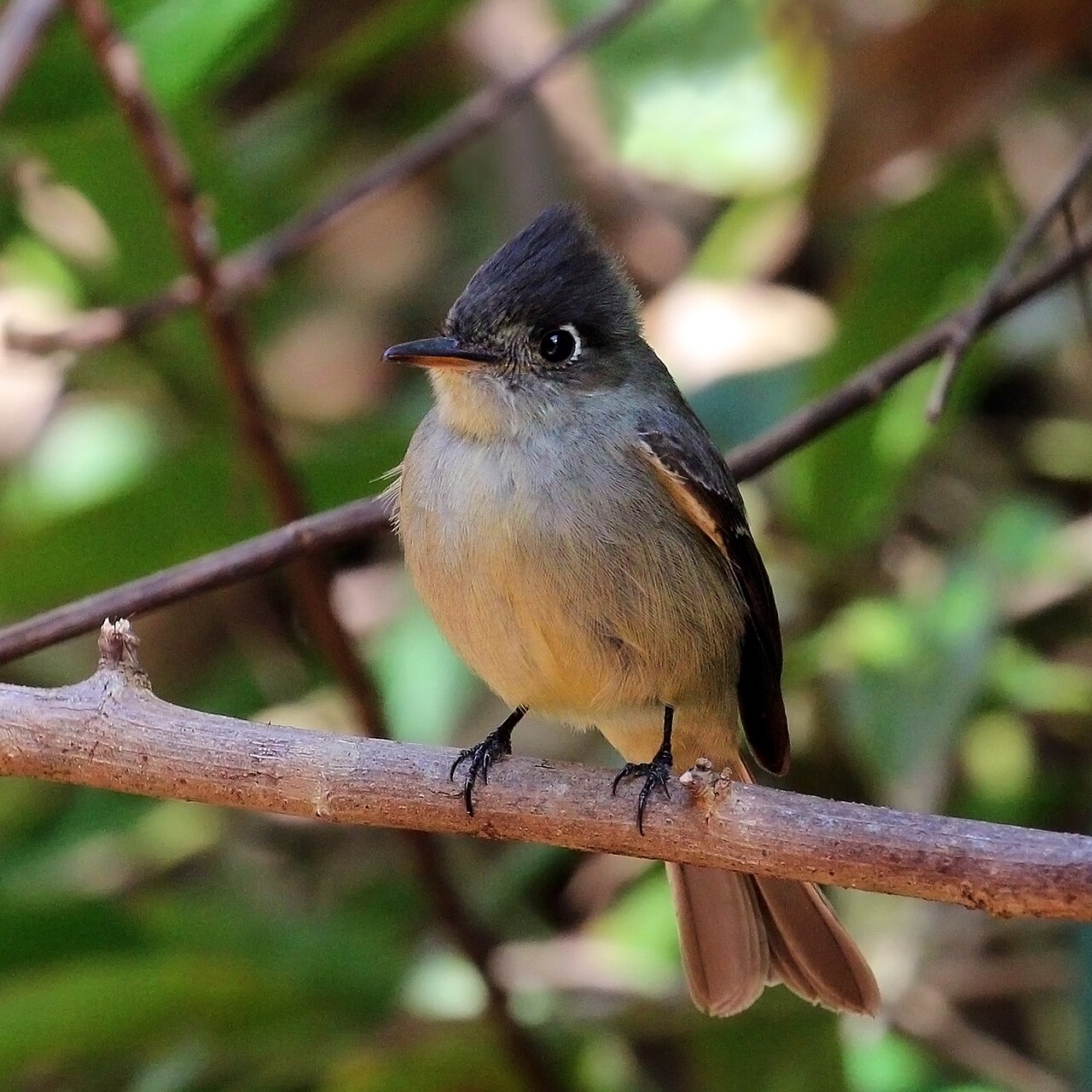
The Cuban Pewee is a pewee of Cuba and the northern Bahamas, with a white crescent behind the eye that no other pewee in the region shows. In North America it is a vagrant: a handful of accepted records, all from southern Florida.
Voice
The call is a high, squeaky whistled eeah or ooweeah, usually given several times in succession and most persistently in the first hour after sunrise. By day it also gives a drawn-out, descending weeeooooo. The form of the northern Bahamas adds a repeated dee-dee. The bird calls from an open branch at mid height and stays in the same spot for long stretches.
No freely licensed recording has been found for this species yet; what to listen for is described below.
Identification
A stocky pewee with a slightly raised crown and a short wing point. The crown is dark olive-grey, back and face olive-brown, and behind the eye stands a white to off-white crescent that shows best in profile. The wing is dull brown with two faint bars on the covert tips. The throat is pale grey, the breast grey-buff with olive at the sides, the belly buff-yellow to mustard. The bill is broad and flat, black above and orange-yellow below along its whole length. Juveniles have broader, buffy-white wing bars.
Confusion species
Eastern and Western Wood-Pewee are longer-winged, show a longer wing point, lack the white crescent behind the eye and have a darker, partly clouded lower mandible. Empidonax flycatchers show a complete eye-ring rather than a crescent, are shorter and slighter in build and usually have clearer wing bars. The Hispaniolan Pewee, which does not occur alongside it, also lacks the crescent. For a Florida record the combination of crescent, short wing point and wholly orange-yellow lower mandible is decisive.
Habitat
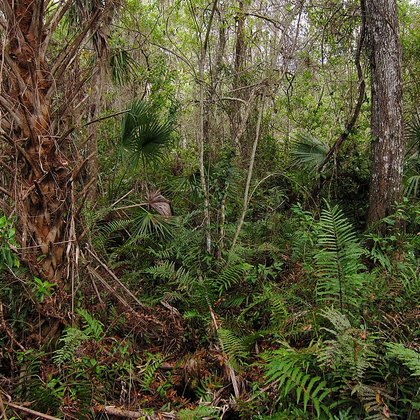
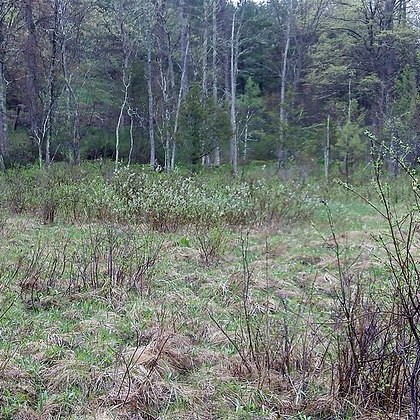
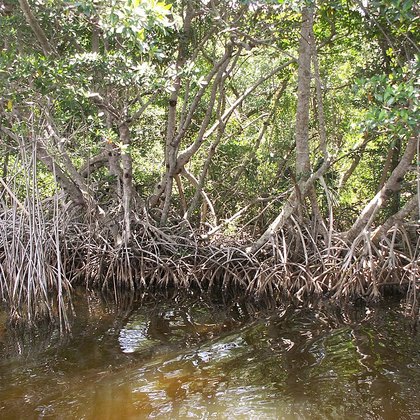
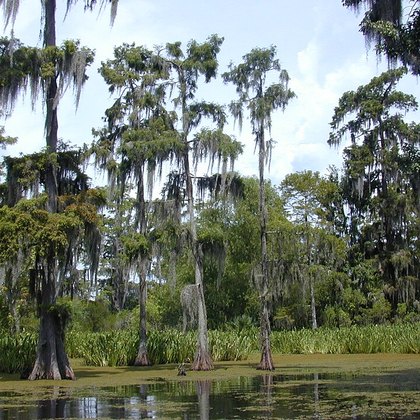
Interior and edges of broadleaf and pine forest, brushy scrubland, swamp forest and plantations, from sea level to 1800 metres but rarely above 1000. The form of the southern Cuban coast keeps mainly to mangrove. It hunts from a fixed perch, takes insects in flight and returns to the same branch.
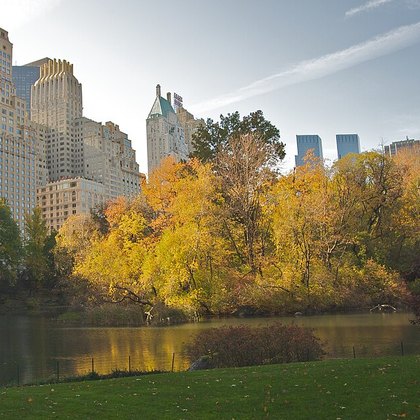
Where the bird is most often found, arranged by the USNVC — the vegetation classification of the United States and Canada — and CMECS for sea and coast.
Range and movements
The species is resident on Cuba and the Isla de la Juventud, on the southern cays and the Jardines de la Reina, and in the northern Bahamas: Grand Bahama, Great Abaco, New Providence, Eleuthera, Cat Island and Andros. Within Cuba birds shift seasonally between higher and lower ground. It reaches North America only as a vagrant; all records come from southern Florida, in spring or autumn, including birds in Miami-Dade County and at Crandon Park. The long absence of the species from North American field guides may account for part of the scarcity of records.
- Resident
- Winter
- Passage
- dark = core range, pale = thinly spread
Where and when to look
In Florida it pays to check the eye of every pewee in coastal woodland or hardwood hammock in March and April: the white crescent behind it is clear in binoculars at ten metres. On Cuba itself, find it in the early morning by voice, along forest tracks and woodland edges at all elevations.
Conservation
The IUCN places the species in the least concern category. The range is large and the bird is regarded as common on Cuba and the northern Bahamas, from the coast to moderate elevations. Population size has not been measured and no separate threats have been identified; hurricane damage to mangrove and pine forest in the Bahamas affects local numbers.
Scientific name
Contopus caribaeus | (d'Orbigny, 1839)
D'Orbigny described the species in 1839 as Muscipeta caribaea; because it was later placed in Contopus, author and year stand in parentheses. The genus name Contopus comes from Greek kontos 'short pole' and pous 'foot', after the short legs of these tyrant flycatchers. The species name caribaeus means 'of the Caribbean'. The type locality is Cuba; Burleigh and Duvall restricted it in 1948 to Holguín in the then province of Oriente. The Cuban vernacular name bobito chico refers to the bird's small size.