All species › Waders, gulls and terns › Jacanas › Northern Jacana
Northern Jacana | Jacana spinosa
Leljacana | Jacana centroamericana
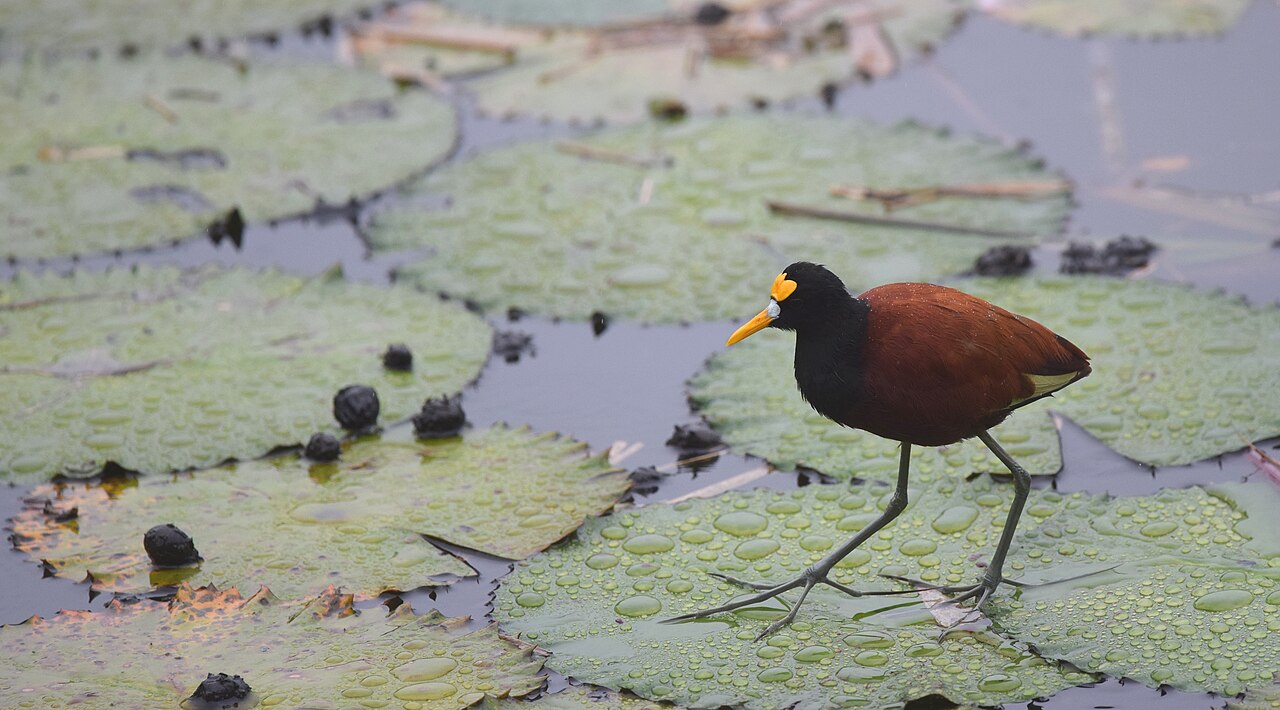
In Mexico, Central America and the Greater Antilles the Northern Jacana is an ordinary bird of any shallow pool with floating leaves, but in the United States it is a great rarity that reaches southern Texas only irregularly. On the water it hardly shows, chestnut among the water lilies; open the wings and every flight feather turns out to be greenish yellow. Texas once held a breeding group, and it disappeared in a single winter.
Voice
It is noisy and usually heard before it is seen: a hard, rattling kek-kek-kek-kek that clatters across the water like a clapper, generally when two neighbours cross each other's boundary. If the quarrel escalates the series turns into a shrill, hoarse screaming while the birds advance on one another with raised wings. In alarm there is a single sharp, drawn-out cry, after which the whole pool falls quiet for a moment. Between a female and the males of her territory soft clucking notes pass back and forth that carry only a few metres.
No freely licensed recording has been found for this species yet; what to listen for is described below.
Identification
A medium-sized wader with a deep chestnut body and a black head, neck and breast, so that at a distance it looks two-toned. Bill and frontal shield are bright yellow, which in low light is the first thing to catch the eye; legs and toes are grey-green and exaggeratedly long. The best character comes only when the wing opens: primaries and secondaries are greenish yellow, so that a bird taking off or stretching suddenly shows two pale flags. The female is clearly larger than the male; otherwise the two are coloured alike. Young birds look entirely different: dark brown above, white below, with a white eyebrow over a dark eye stripe — and it is precisely those birds that wander furthest, and that turn up in Texas.
Confusion species
The young bird is the difficult one: it is confused with a young Purple Gallinule, which also walks on floating leaves and has long yellow legs, but that is warm brown to olive-yellow, without the sharp white eyebrow and without yellow-green in the wing. Adults are hardly to be mistaken for anything as long as the wing stays closed; on the water the dark front end suggests a gallinule, until the bird walks off and the long toes come into view. South of this map window, from western Panama on, the species is replaced by Wattled Jacana (Jacana jacana), which carries red wattles instead of yellow; in the border zone birds occur that are intermediate between the two.
Habitat
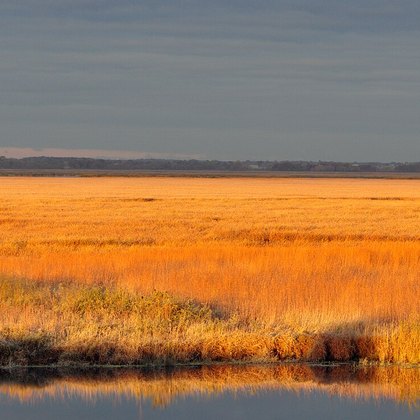
Shallow fresh water with a closed cover of floating leaves: marsh pools, old river bends, ditches, rice fields, cattle ponds and the quiet edges of lagoons. Water lily, cattail and floating heart matter more than the surroundings; a bare pool is worthless to it, however clean the water. It comes into farmland and sometimes into village ponds, as long as that leaf cover is there. Take the vegetation away, or let the pool dry out, and the bird is gone the following week.
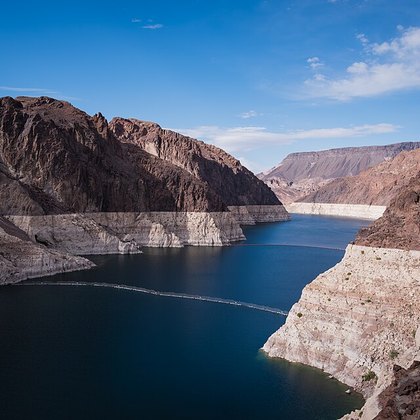
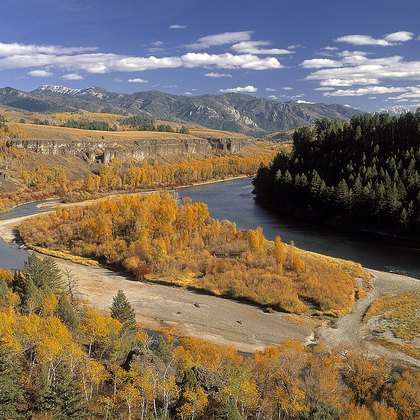
Where the bird is most often found, arranged by the USNVC — the vegetation classification of the United States and Canada — and CMECS for sea and coast.

Range and movements
Resident from Sinaloa and Tamaulipas in Mexico south through Central America to western Panama, and in Cuba, Jamaica and Hispaniola. In the United States it is a great rarity: before 1910 possibly still a scarce breeder along the lower Rio Grande, and between 1967 and 1978 a group of some forty birds lived at Maner Lake in Brazoria County, Texas. That group disappeared after the hard freeze of the winter of 1977 to 1978, after which the owner had the water plants cleared from the lake. Since then it has been a matter of single birds, with years between the records; the map therefore shows only the region where it is genuinely established, and not Texas.
- Resident
- Breeding (summer)
- Winter
- Passage
- dark = core range, pale = thinly spread
Where and when to look
In Mexico or Central America find a shallow pool with water lilies and let the binoculars travel slowly along the edge of the leaf cover: in grey weather the yellow bill is the only thing that lights up. Come early, when the birds are noisiest and boundary quarrels run across the whole pool. If one flies, watch the wing and not the body; the yellow-green shows at any range and settles the identification at a stroke.
Conservation
The species counts as not threatened and is common over most of its range; cattle ponds, ditches and rice fields have even added places where it was not found before. The pressure lies in the clearing of vegetation: where floating plants are removed by hand or with herbicide, or where a marsh is drained, it goes at once. The Texas case shows how thin the hold is at the northern edge: one hard winter and one cleaned-out lake were enough to end the country's only breeding group.
Scientific name
Jacana spinosa | (Linnaeus, 1758)
Linnaeus described the species in 1758 as Fulica spinosa, among the coots; because it was later moved to another genus, author and year stand in parentheses. The genus Jacana was introduced by Brisson in 1760; the word comes from Tupí in Brazil, where it is the name of these birds. The specific name spinosa is Latin for 'thorny' and refers to the sharp spur at the bend of the wing. The type locality took a detour: Linnaeus went by a plate of Edwards, with the note that the bird had been brought from Cartagena — the species does not live at that city, and so Todd later substituted Panama.