All species › Passerines › New World blackbirds, troupials and allies › Scott's Oriole
Scott's Oriole | Icterus parisorum
Scotts troepiaal | Turpial de Scott
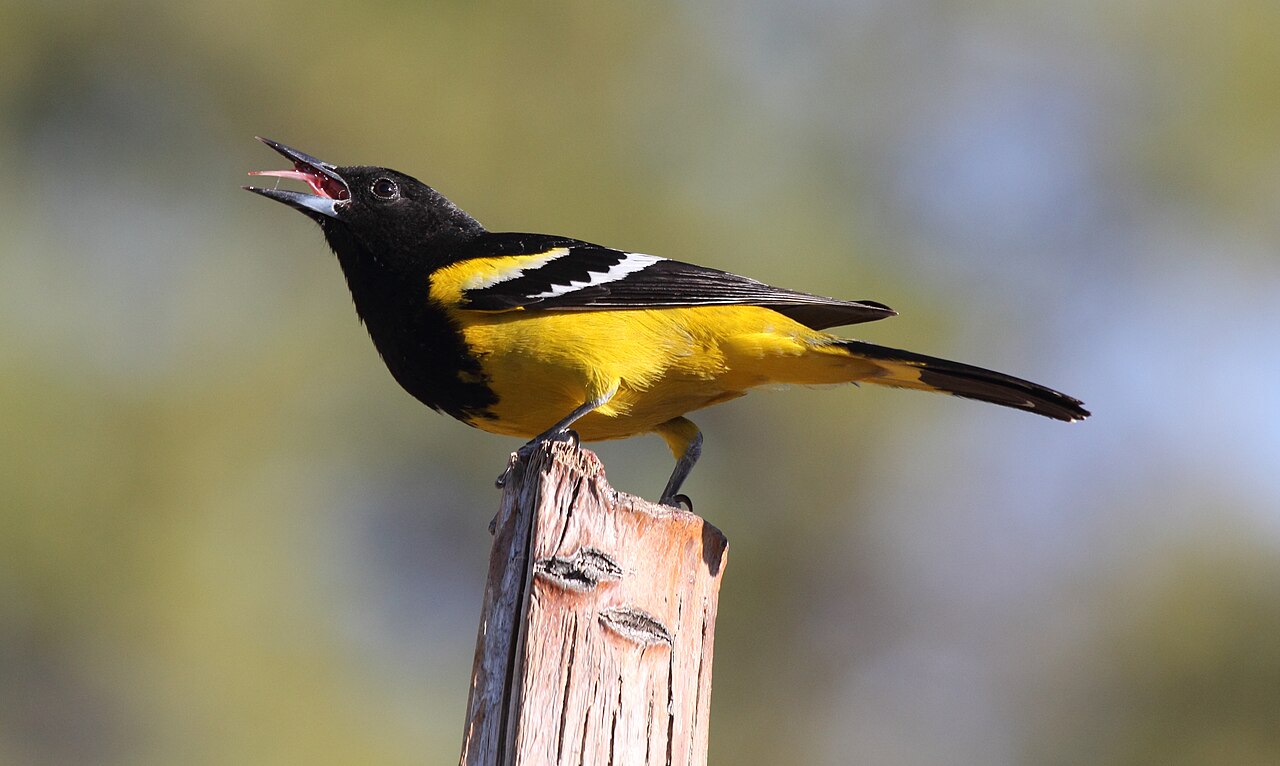
Scott's Oriole is the oriole of the yucca and agave slopes of the arid Southwest. The male is black on head, breast and back and lemon yellow on belly, rump and tail base. In the United States it is a summer bird; across much of Mexico it is present all year.
Voice
The song is a short series of clear whistled notes mixed with notes that shift rapidly in pitch; the series lasts two to three seconds and is repeated from the top of a yucca stalk or a juniper. Both sexes sing, the female with fewer different notes. The call is a nasal, repeated chuck, along with a softer nasal note between mates. The male begins singing early, well before sunrise.
Recording: steve — CC BY-SA 4.0 · La Ribera, Los Cabos, Baja California Sur, Mexico · xeno-canto
Identification
The male has a black head, throat, breast, back and shoulders; belly, rump and undertail coverts are lemon yellow. The wing is black with a yellow shoulder patch and a white bar across the tips of the greater coverts. The tail is black with a yellow base and white tips. The female is olive-grey above with dark streaking, olive-yellow below, with two white wing bars; many females have a black chin and throat. The bill is straight and pointed, with a grey-blue base.
Confusion species
Black-vented Oriole has no yellow belly at all and is smaller. Hooded and Bullock's Orioles have an orange to orange-yellow belly and a black mask or crown, but never a wholly black back and breast together. Audubon's Oriole has a black back but an orange-yellow rump and head. Female Scott's is separated from female Bullock's by the olive-yellow rather than orange tone and by the black that often runs down the throat.
Habitat
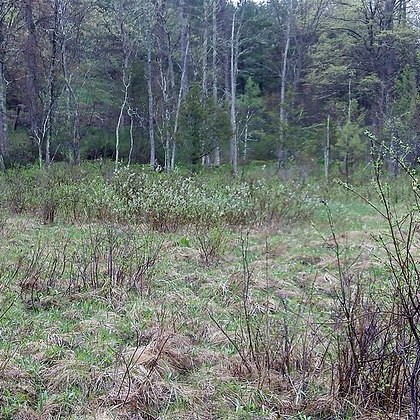
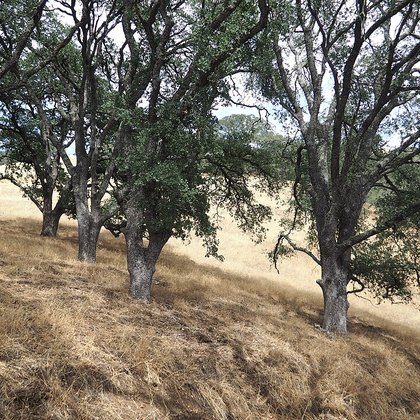
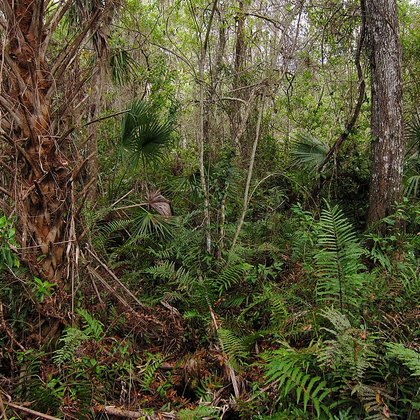
Dry slopes and plateaus roughly between 300 and 3000 metres with yucca, agave, sotol and ocotillo, and also pinyon-juniper woodland, open pine-oak forest and dry scrub along woodland edges. The nest is often built in a yucca and woven from the fibres of that same plant. In Mexico it also uses tropical deciduous forest in lower valleys in winter.
Where the bird is most often found, arranged by the USNVC — the vegetation classification of the United States and Canada — and CMECS for sea and coast.


Range and movements
The breeding range in the United States runs from southern California and southern Nevada across southern Utah, Arizona and New Mexico to West Texas, with an arm into southwestern Colorado. These birds leave in August and the first half of September and return in April. In Mexico the species is resident on the southern Baja California peninsula and on the plateau from Sinaloa and Nuevo León to the Jalisco–Puebla line; northern wintering birds add to those, and also occur along the west coast and in Guerrero and Oaxaca. Beyond the range there are scattered records as far as Minnesota and New York.
- Resident
- Breeding (summer)
- Winter
- Passage
- dark = core range, pale = thinly spread
Where and when to look
Look for it between late April and June on a slope with flowering yuccas: the male sings from the highest stalk and carries for hundreds of metres. The black-and-yellow pattern is useless against the light; then watch the contrast between the dark front and the pale rump as the bird flies off.
Conservation
The world population is put at about four million mature birds and the species is listed as Least Concern, but the trend is downward. It is nowhere numerous in the United States. The main factor is loss of yucca and agave stands through grazing, housing on the desert margin and changed fire regimes; where those plants remain, so does the species.
Scientific name
Icterus parisorum | Bonaparte, 1838
Bonaparte described the species in 1838 as Icterus Parisorum; it has stayed in the same genus, so author and year stand without parentheses. Icterus comes from Greek ikteros, the name of a yellow bird the sight of which, according to classical writers, cured jaundice. The species name parisorum is a genitive plural: 'of the Paris brothers', two French merchants who financed natural history expeditions to Mexico. The English name goes back to General Winfield Scott, to whom Darius N. Couch dedicated the bird without knowing that Bonaparte had already described it.