All species › Birds of prey › Kites, Old World vultures, eagles and hawks › Common Black Hawk
Common Black Hawk | Buteogallus anthracinus
Zwarte buizerd | Busardo negro
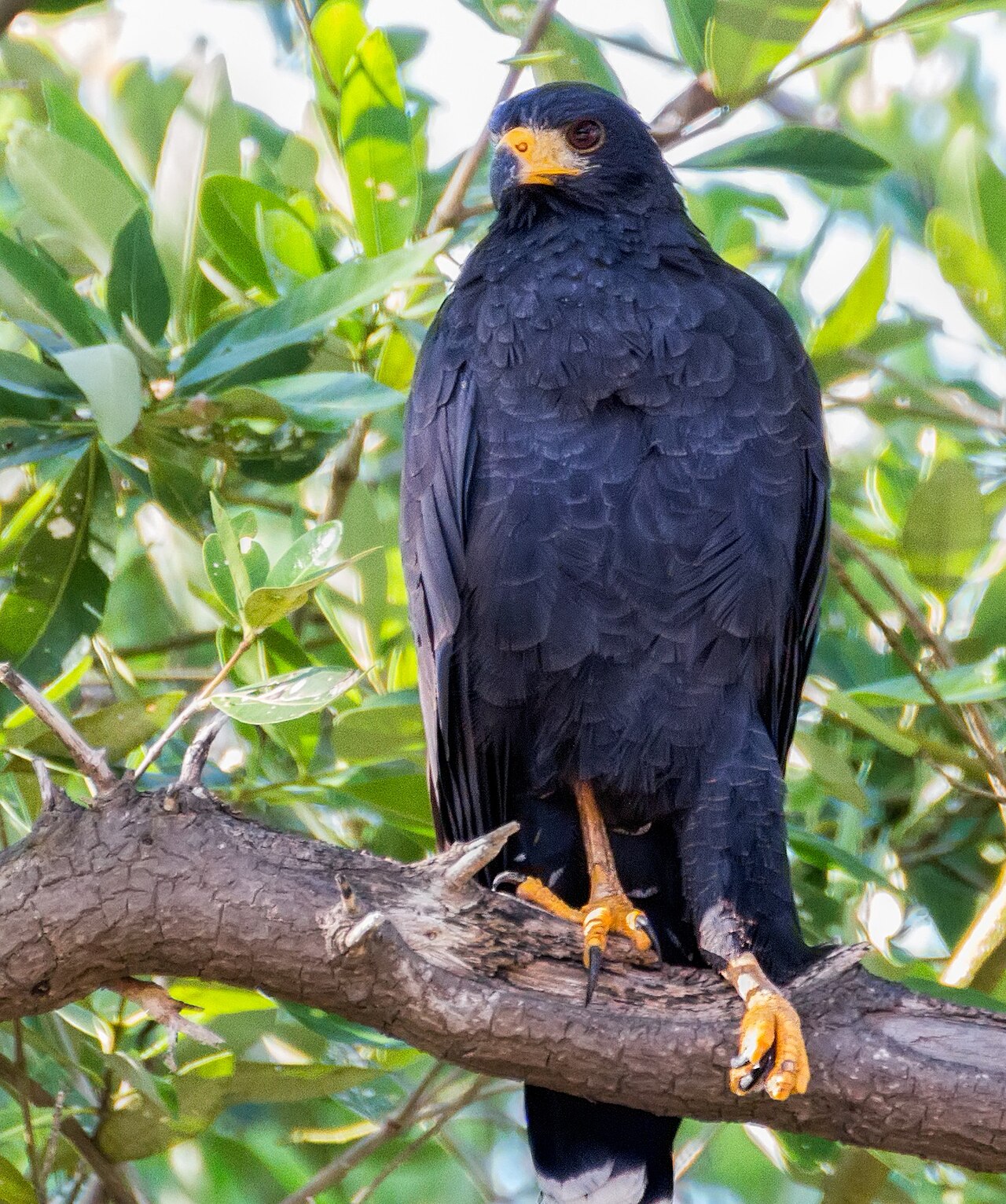
The Common Black Hawk is a stocky, coal-black raptor with strikingly broad wings and a short tail crossed by one wide white band. Within this guide it is entirely tied to running water: in the United States it breeds only along creeks and small rivers in the canyons of Arizona, New Mexico, Utah and west Texas, hunting fish, crayfish and frogs.
Voice
The usual call is a high squeaky klee, repeated rapidly and strongly recalling the call of an Osprey. It is loudest at the nest: approach a nest tree in the breeding season and the series comes down without a break. It is also given during display flights above the river, where the notes run together into a rattling, piping phrase that carries the length of a canyon. Away from those situations the bird is fairly silent, and in tropical mangrove the call sounds lower and slower.
Recording: Gean Carlo Valdés — CC0 · Islas secas, Panama · xeno-canto
Identification
Adults are blackish brown throughout, with a broad white band across the middle of the tail and a narrow white tail tip; the bill is yellow with a black tip and the legs are bright yellow. In flight the silhouette is the best mark: very broad, almost rectangular wings and a notably short tail, so that the bird looks wider than it is long — a shape no other raptor in the United States shares. Soaring birds often show a small pale patch at the base of the outer primaries. Juveniles look quite different: streaky brown above, creamy buff with heavy dark streaks below, and a tail crossed by many narrow dark and light bands instead of one broad white one. As in nearly all hawks and buzzards the female is larger and heavier than the male, though in the field this shows only when a pair is seen together.
Confusion species
Zone-tailed Hawk (Buteo albonotatus) is the main pitfall: it is slimmer, with much longer and narrower wings and a longer, multi-banded tail, and it soars with wings held in a shallow V, rocking like a Turkey Vulture. Dark-morph Red-tailed Hawks show a reddish or faintly banded tail and far narrower wings. At long range a soaring Common Black Hawk can pass for a Turkey Vulture, but the vulture holds its wings in a pronounced V and has a small bare red head. Juveniles are readily taken for young Broad-winged or Swainson's Hawks; look then at the heavy, closely spaced tail bands and at the yellow cere above the bill.
Habitat
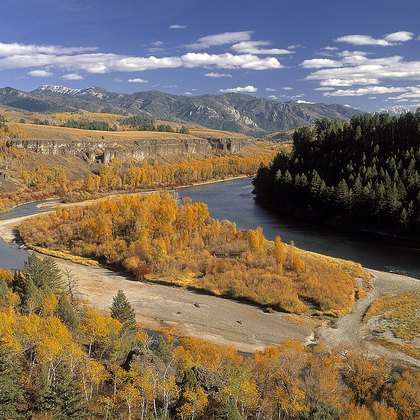
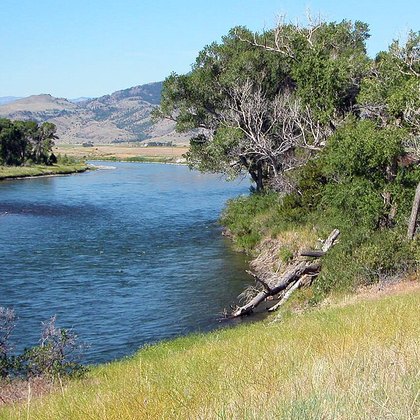
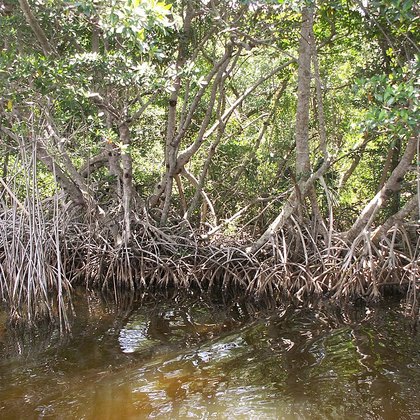
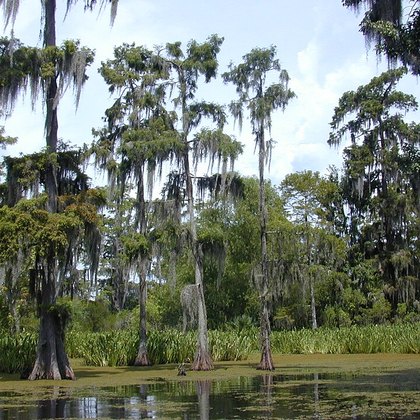
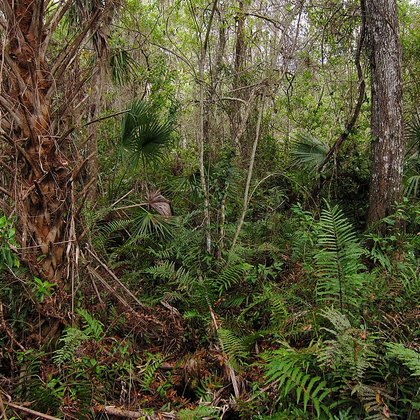
In the north of its range strictly the narrow ribbon of woodland along creeks and rivers that carry water all year: Arizona sycamore, cottonwood and willow in canyons and desert valleys. It hunts from branches overhanging the water or from rocks in the streambed, and will also walk or wade in the shallows after prey. Further south it uses mangrove forest, freshwater swamp, flooded woodland and mountain streams. Where a stream runs dry, or where groundwater pumping has withered the valley bottom, the species disappears; it also tolerates human traffic near the nest poorly.
Where the bird is most often found, arranged by the USNVC — the vegetation classification of the United States and Canada — and CMECS for sea and coast.
Range and movements
In the United States it is purely a summer bird: birds arrive in March, breed from March to early August, and from November to mid-February are almost entirely south of the border. The breeding range lies in central and southeastern Arizona and southwestern New Mexico, with small numbers in southwestern Utah and in west Texas, where the Davis Mountains and the Rio Grande hold a handful of pairs. The population of northwestern Mexico migrates too; through the rest of Mexico, Central America and southwards it is resident and far more numerous. Arizona therefore marks the northern limit of the world range, and the foothold in Utah and southern Nevada dates only from recent decades.
- Resident
- Breeding (summer)
- Winter
- Passage
- dark = core range, pale = thinly spread
Where and when to look
Between mid-April and July walk a permanently flowing creek in an Arizona canyon — Aravaipa, Sycamore Canyon, the upper Verde or Gila — and listen first: the Osprey-like klee series gives the bird away before the eye does. Then search the heavy side branches of sycamores that lean over a pool, where it often sits motionless with only the yellow legs catching the light. If it circles up, check the broad, short shape and the single white tail band.
Conservation
Worldwide there are perhaps two million birds and the species is not considered threatened, but the United States population is small: about 220 to 250 pairs, of which 80 to 90 per cent nest in Arizona. The threat there is concrete: water abstraction and the drying of creeks, and the replacement of cottonwood and willow by invading saltcedar, make the narrow riverside woods unusable. Because each pair needs a long stretch of stream, the loss of a single creek valley registers immediately in the national total.
Scientific name
Buteogallus anthracinus | (Deppe, 1830)
Wilhelm Deppe described the species in 1830 as Falco anthracinus, among the falcons; because it was later placed in another genus, author and year stand in parentheses. The genus name Buteogallus was coined in the same year by Lesson from Buteo, the buzzards, and Gallus, the junglefowl, after the heavy, gallinaceous build of these birds. anthracinus comes from the Greek word for coal and means 'coal-black', which describes the plumage exactly. The described specimen came from Veracruz, Mexico.