All species › Waders, gulls and terns › Skimmers, noddies, terns and gulls › Short-billed Gull
Short-billed Gull | Larus brachyrhynchus
Amerikaanse stormmeeuw | Gaviota de Alaska
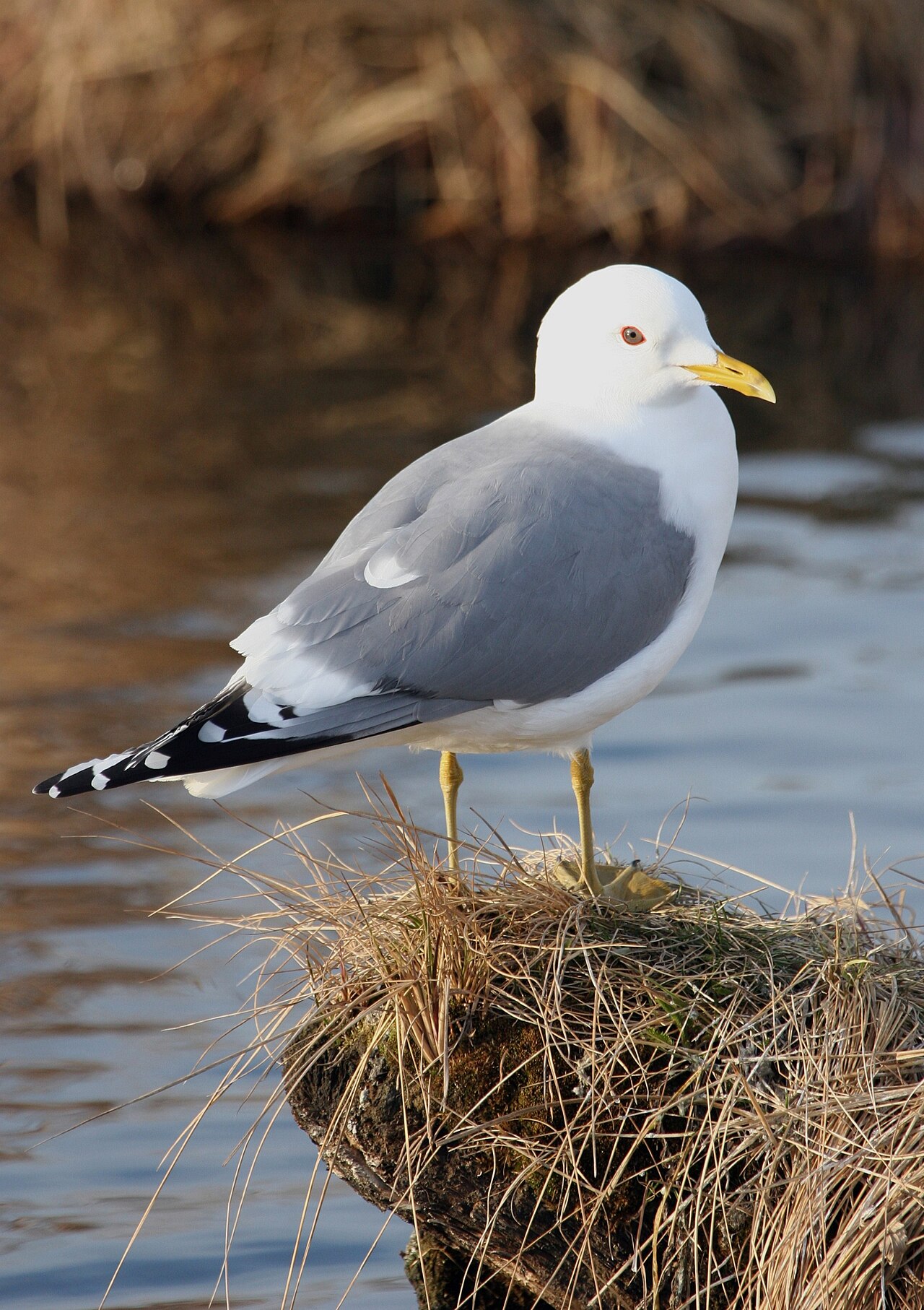
The Short-billed Gull is the smallest and softest-featured of the white-headed gulls: a round dove-like head, a thin unmarked yellow bill and a dark eye. It breeds by the lakes and rivers of Alaska and northwestern Canada, sometimes in a tree, and winters along the Pacific coast. Until 2021 it was treated as the same species as the Eurasian Common Gull.
Voice
The commonest call is a high mewing kee-yer, thinner and softer than the shouting of the big gulls. The long call is a rapid series of high, reedy notes that falls away at the end, usually given with the head raised from a piling or a stretch of shore rock. At the nest there is a short nasal alarm note and a soft yelping between the pair. On a winter beach full of gulls it stands out above all because its voice is so much higher than the rest.
No freely licensed recording has been found for this species yet; what to listen for is described below.
Identification
A small gull with a round, dove-like head, a short thin bill without ring or spot, and a dark eye that gives the face a gentle expression. Adults are medium grey on the mantle and white below, with yellow to yellow-green legs, a red orbital ring in the breeding season, and a black wingtip carrying large white mirrors and white tongue-tips that run far into the black. In winter the head and neck are heavily smudged grey-brown, which makes the dark eye stand out all the more. Juveniles are warm pale brown with white feather fringes, dark barring on the undertail coverts and a small two-toned bill; through the first winter the first grey back feathers come in. In flight it looks light and easy, more like a large tern than a gull.
Confusion species
Ring-billed Gull (Larus delawarensis) is the species it mixes with daily on the west coast: larger, blockier-headed, pale-eyed, with a thicker bill carrying a clear black ring, and far less white in the wingtip. Common Gull (Larus canus), from which it was split only in 2021, is very nearly identical but has a larger bill, shorter wings, more extensive black in the wingtip with smaller mirrors and a narrower white trailing edge; both occur in Alaska, and a lone bird cannot always be named. Bonaparte's Gull (Chroicocephalus philadelphia) is smaller still, with a black bill, a black ear spot in winter and a white wedge in the forewing. On young birds the fine, sharply two-toned bill helps: that of a young Ring-billed Gull is clearly heavier.
Habitat
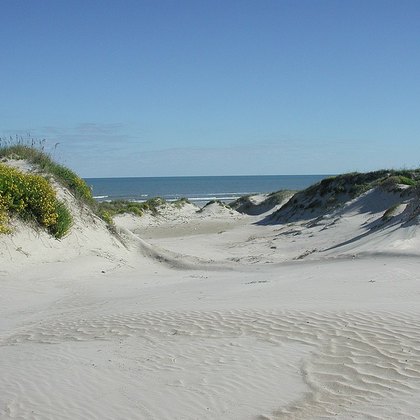
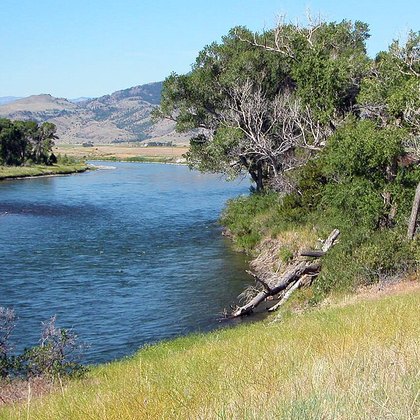
Breeds in the north by lakes, rivers, bogs and coastal lagoons in the boreal forest and the scrub above it, nesting on the ground, on a gravel bar, on a tree stump, or on a branch in a spruce up to some six metres above the ground — unusual for a gull. On the coast it feeds on fish and on what lies among the weed; at inland lakes chiefly on insects. In winter it uses estuaries, river mouths, lagoons and beaches, and beyond them freshwater ponds just behind the shore, playing fields and wet pasture. Unlike most large gulls it avoids landfills and the open ocean.
Where the bird is most often found, arranged by the USNVC — the vegetation classification of the United States and Canada — and CMECS for sea and coast.



Range and movements
Breeds on the Alaskan mainland east to northwestern Alberta and south to southwestern British Columbia. Inland breeders move first straight to the coast and then south; they arrive late, with the largest numbers from October to December, and return from March to May. It winters along the Pacific coast from southern British Columbia to California and, in smaller numbers, to northwestern Baja California. To eastern North America it is a rare vagrant, and in southeastern Alaska part of the population stays all winter.
- Resident
- Breeding (summer)
- Winter
- Passage
- dark = core range, pale = thinly spread
Where and when to look
Look for it between November and March on a beach, a river mouth or a wet playing field on the coast of Washington, Oregon or California, in the big mixed gull flocks. Work the flock by heads rather than backs: the small round head with its dark eye and thin plain bill jumps out among the pale staring eyes of the Ring-billed Gulls.
Conservation
Because the species was only split from the Common Gull in 2021, the IUCN has not yet assessed it separately and the Red List carries no category for it. Numbers along the Pacific coast appear stable; the bird gains from people rather than suffering by them, using harbours, playing fields and wet farmland. The risks lie in oil spills in the wintering areas, where many birds crowd into a few bays, and in damage to the northern breeding lakes.
Scientific name
Larus brachyrhynchus | Richardson, 1831
Richardson described the species in 1831 as Larus brachyrhynchus, in the Fauna Boreali-Americana; because it has stayed in that same genus ever since, author and year stand without parentheses. brachyrhynchus is Greek for short-billed, from brakhus for short and rhunkhos for bill. The type locality is Great Bear Lake in the Northwest Territories. For over a century the bird was regarded as a subspecies of the Common Gull; in 2021 the American Ornithological Society recognised it again as a species of its own, on differences in genetics, plumage, structure and voice, and with that brought Richardson's name of 1831 back into use.