All species › Passerines › New World warblers › Black-throated Blue Warbler
Black-throated Blue Warbler | Setophaga caerulescens
Blauwe zwartkeelzanger | Reinita azulada
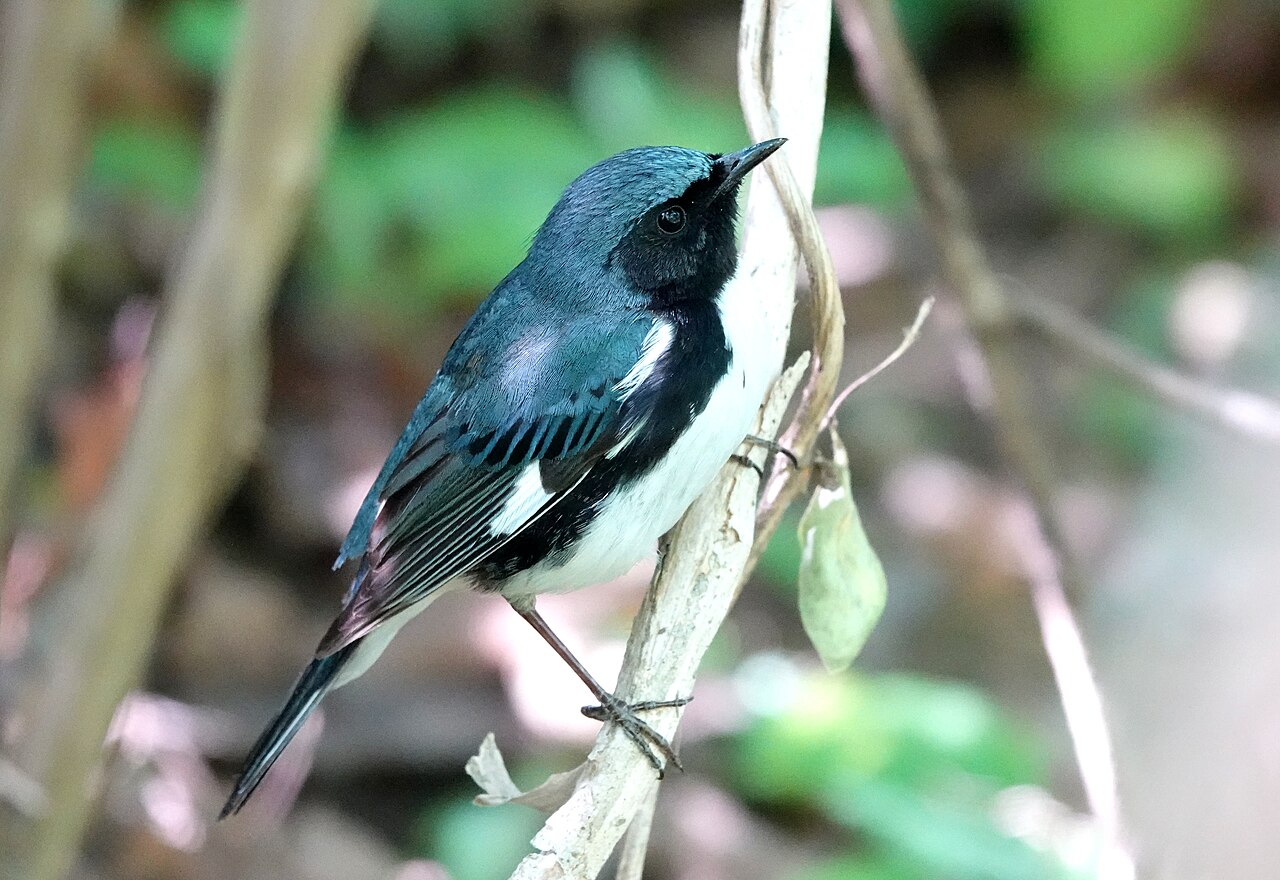
In the Black-throated Blue Warbler male and female differ so strongly that they were long taken for two species. The male is deep blue with a black throat and white belly, the female plain olive-brown; both carry a small white square at the base of the wing that stays visible in almost any posture.
Voice
The song is a slow series of three to five drawn-out, buzzy notes that slides upward at the end: zwee-zwee-zweee. It sounds hoarse and unhurried beside the fast buzzes of other warblers and is kept up through the middle of the day. The call is a flat, short ctuk, low in pitch for a warbler of this size. On migration a thin, slightly downslurred tseep is given at night.
Recording: Doug Hynes — CC BY-SA 4.0 · Port L'Hebert Migratory Bird Sanctuary, Nova Scotia, Canada · xeno-canto
Identification
The male is dark blue-grey on crown and back, with a black mask, black throat and black flanks set sharply against white underparts. The female is olive-brown above and pale buff-yellow below, with a pale supercilium and a white crescent under the eye. The feature both sexes share is a small white panel at the base of the primaries, like a white handkerchief on the folded wing; in birds of the southern Appalachians that panel is smaller and the male's back is streaked black. They forage slowly and methodically in the shrub layer, seldom high in the canopy.
Confusion species
The male in fresh plumage is hard to mistake: Cerulean Warbler is paler blue with a white throat and streaked flanks, and Blue-grey Gnatcatcher lacks the black throat. The female is the real problem, being an unstreaked brown warbler: Tennessee Warbler has no white wing panel and a finer bill, Orange-crowned Warbler is yellower and streaked on the undertail coverts, and vireos have a thicker hooked bill and move more slowly. Always look first for the white wing square.
Habitat
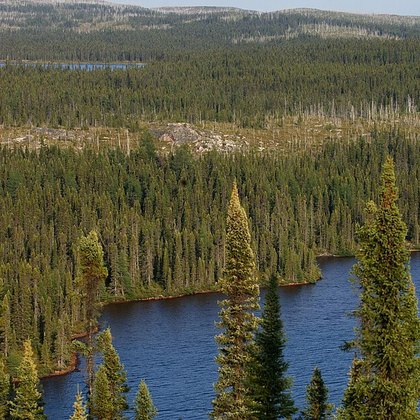
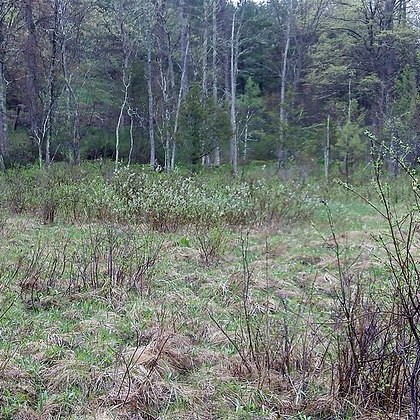
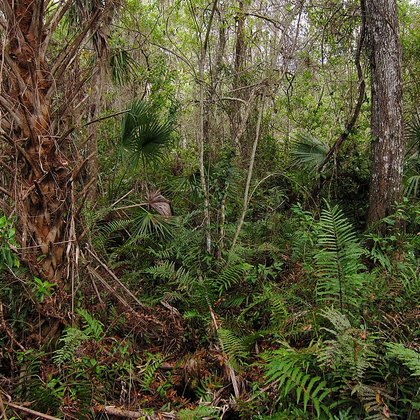
Unbroken mature deciduous and mixed forest with a dense shrub layer of hobblebush, laurel and rhododendron, mainly in hill and mountain country; in the Appalachians roughly between 800 and 1600 metres. The nest sits low, usually under a metre and a half, in a dense shrub. In winter it uses tropical forest and shade-coffee plantations in the Greater Antilles, where it defends a fixed territory for the whole season.
Where the bird is most often found, arranged by the USNVC — the vegetation classification of the United States and Canada — and CMECS for sea and coast.

Range and movements
A breeding bird of southeastern Canada and the northeastern United States, from Minnesota and Ontario to Nova Scotia and Maine, and south along the Appalachians to northern Georgia. The wintering range lies almost entirely in the Greater Antilles and the Bahamas: northern breeders reach mainly Cuba and Jamaica, southern ones Hispaniola and Puerto Rico. Small numbers winter in southern Florida and along the Caribbean coast of Central America. Migration falls in April–May and September–October.
- Resident
- Breeding (summer)
- Winter
- Passage
- dark = core range, pale = thinly spread
Where and when to look
Walk a wooded mountain slope in May or June and listen for the slow, buzzy zwee-zwee-zweee; the bird often sings from a shrub at eye level and allows a close approach. Point anyone who finds a plain brown warbler to the white wing square — that single mark settles the female at a glance.
Conservation
The world population is put at about 2.4 million birds and is increasing; a rise of around 163 percent was measured between 1970 and 2014 and the species rates as of low conservation concern. The gain goes with the ageing of northeastern forest. Points of attention remain the conversion of shade coffee to sun coffee in the Antilles, the loss of the shrub layer where White-tailed Deer occur at high density, and the small, concentrated wintering range.
Scientific name
Setophaga caerulescens | (Gmelin, 1789)
Gmelin described the species in 1789 as Motacilla caerulescens, in the wagtail genus; its later placement in Setophaga puts author and year in parentheses. The type locality is Santo Domingo on Hispaniola, that is, the wintering range and not the breeding range. Setophaga comes from Ancient Greek ses 'moth' and phagos 'eating'; caerulescens is Latin for 'turning bluish', after the male. The English and Dutch names both name the blue upperparts and the black throat.